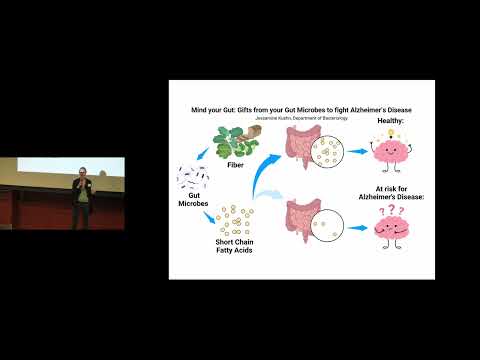
This thesis investigates how gut microbes influence brain health through short-chain fatty acids produced from dietary fibre. Measuring these compounds in stool samples, the research finds lower levels in people at risk for Alzheimer’s disease. The next phase tests whether supplementing short-chain fatty acids can prevent or treat Alzheimer’s in mouse models.