This study investigates how immune cells influence Alzheimer’s disease. Using a mouse model, researchers found that removing T cells did not alter amyloid plaque levels but changed microglial behavior, leading to better protection of myelin. The findings suggest T cells may worsen neurodegeneration and highlight new therapeutic possibilities.

This research explores how the hippocampus and prefrontal cortex communicate to support memory for sequences of events. By understanding how these brain regions track past, present, and future, the work aims to shed light on cognitive impairments seen in disorders such as Alzheimer’s disease and depression.

This talk presents a new noninvasive MRI method to visualize the brain’s immune response. By imaging inflammation without injections or contrast agents, the research offers new insights into Alzheimer’s disease, ALS, and traumatic brain injury, helping researchers better understand how brain inflammation contributes to neurological disorders.

This talk describes research on how the brain learns and remembers by recording neural activity in mice navigating virtual environments. By studying hippocampal and cortical neurons, the work reveals how the brain builds cognitive maps of space and experience, offering insights into memory loss and Alzheimer’s disease.

Myelin enables efficient communication between nerve cells and is essential for cognition, movement, and sensation. In neurodegenerative diseases, myelin is lost, impairing daily life. This research uses stem cells, gene profiling, and gene editing to uncover why myelin fails—and how regenerating it could transform treatment.

Neurodegenerative diseases like Alzheimer’s and Parkinson’s are closely linked to abnormal dopamine levels but are diagnosed too late. This research develops a tiny electrochemical brain sensor that selectively detects dopamine in real time. Such technology could enable earlier diagnosis, better monitoring, and improved treatment of neurological disorders.

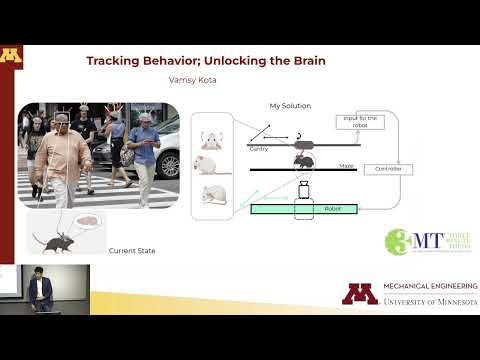
Understanding how the brain controls behavior is key to studying neurological disease. This research introduces a high-speed robotic system that tracks mouse behavior in fine detail. By synchronizing precise behavioral data with brain activity recordings, it enables researchers to link specific neural regions to actions, improving insight into disorders like Parkinson’s and Alzheimer’s.

Researchers describe a simple strategy to slow Alzheimer’s disease by capping toxic tau protein chains. Inspired by a ring-stacking toy, they engineered spiky molecular “hats” that bind tau, halt aggregation, and reduce spread in cellular and postmortem brain models, suggesting broad potential across neurodegenerative disorders with future therapeutic promise worldwide.

This thesis investigates how gut microbes influence brain health through short-chain fatty acids produced from dietary fibre. Measuring these compounds in stool samples, the research finds lower levels in people at risk for Alzheimer’s disease. The next phase tests whether supplementing short-chain fatty acids can prevent or treat Alzheimer’s in mouse models.

This talk highlights the lack of ADRD resources and care access for capital-D Deaf communities despite their elevated risk. Through community engagement, sign-language translations, and caregiver-informed guidelines, the research seeks to improve equitable aging and end-of-life support for Deaf individuals until a cure for Alzheimer’s becomes reality.