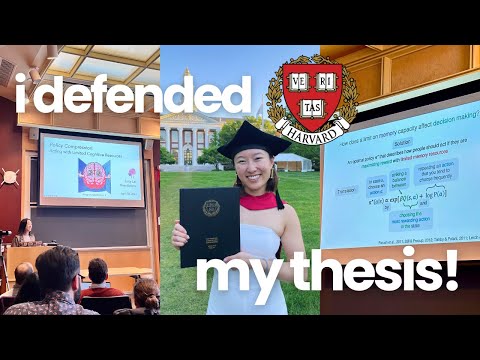
In our complex world, how do humans learn and make decisions when their cognitive resources are limited? My thesis introduces a new theory called "policy compression" to answer this question! The basic idea is that people simplify their decision-making processes to reduce the mental effort required, without significantly compromising the benefits or rewards of those decisions. I use computational modeling, human experiments, and brain studies in rats to explain why people exhibit certain decision-making patterns, like the tendency to stick with familiar choices, and why they use strategies like "chunking" to reduce mental load. I also propose that different brain regions work together to balance mentally taxing decisions with more automatic, habitual decisions. This allows the brain to optimize behavior in complex environments. In conclusion, my thesis offers a new way to understand how humans and animals make decisions with limited mental resources, and shows how the brain organizes itself to handle decision-making efficiently.