
This research explores how buy now, pay later services are becoming normalised among young consumers in the UK. The study examines how marketing, checkout integration, and psychological framing shape perceptions of debt, arguing for stronger regulation, improved consumer protection, and greater financial literacy to address emerging financial risks among younger generations.
AI can improve efficiency in humanitarian aid but risks undermining its moral foundation. Research shows donors perceive AI as lacking empathy, leading to reduced engagement and donations. The key challenge is balancing technological efficiency with human connection, ensuring that innovation supports rather than erodes the trust and compassion that sustain aid systems.
This research examines how social networks influence life outcomes, showing that cross-income friendships significantly improve earnings, well-being, and social trust for low-income individuals. Using large-scale data, it demonstrates that environment shapes opportunity, highlighting the importance of institutions like universities in fostering connections that can transform lives and promote social mobility.
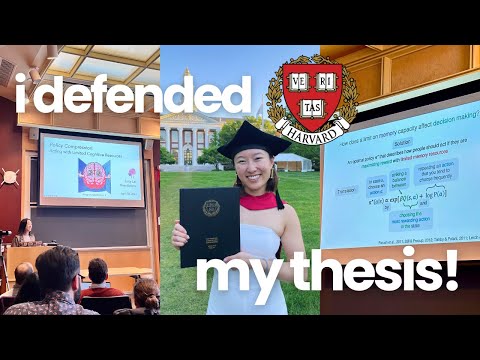
In our complex world, how do humans learn and make decisions when their cognitive resources are limited? My thesis introduces a new theory called "policy compression" to answer this question! The basic idea is that people simplify their decision-making processes to reduce the mental effort required, without significantly compromising the benefits or rewards of those decisions. I use computational modeling, human experiments, and brain studies in rats to explain why people exhibit certain decision-making patterns, like the tendency to stick with familiar choices, and why they use strategies like "chunking" to reduce mental load. I also propose that different brain regions work together to balance mentally taxing decisions with more automatic, habitual decisions. This allows the brain to optimize behavior in complex environments. In conclusion, my thesis offers a new way to understand how humans and animals make decisions with limited mental resources, and shows how the brain organizes itself to handle decision-making efficiently.

2025
This research examines simultaneous and concurrent polysubstance use and the behavioral economic mechanisms underlying them. Using daily diary surveys and multi-level modeling, the study investigates alcohol demand and delay discounting as predictors of risky substance use patterns, aiming to inform interventions for individuals who use multiple substances.