This research investigates gluon saturation, an extreme state of matter that existed immediately after the Big Bang. By developing precise theoretical calculations for particle collision experiments, it helps scientists understand how gluons bind quarks to form matter, revealing the fundamental processes that shaped the early universe and made life possible.
This research explores the philosophical foundations of particle physics and the Standard Model. Focusing on neutrinos, it argues that these particles may be better understood as different states of a single entity rather than separate objects. The project aims to develop a deeper ontology describing the fundamental structure of physical reality.
This research studies neutrinos—elusive particles that rarely interact with matter—and their ability to change type, known as neutrino oscillation. Using detectors in Japan, the experiment compares neutrinos before and after travel. Improved near-detector accuracy enables precise measurements, helping explain fundamental questions about matter, antimatter, and the structure of the universe.
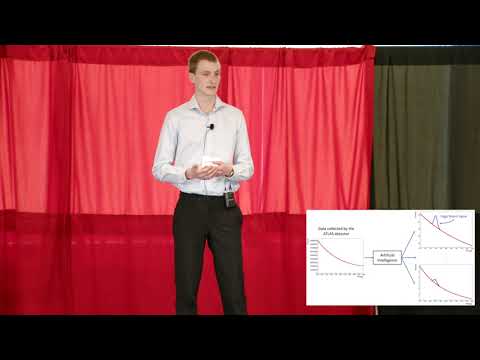
This research uses AI to detect subtle interactions between the Higgs boson and muons at the Large Hadron Collider. By refining large datasets, it aims to uncover how particles acquire mass at smaller scales. Confirming this interaction would deepen understanding of the Higgs field and fundamental physics.