This research investigates gravitational-wave memory, a permanent distortion left in spacetime after black hole mergers. Using computational solutions to Einstein’s equations, the work predicts detectable memory signals for observatories like LIGO, helping probe fundamental spacetime symmetries, gravitational physics, and the connection between classical gravity and quantum theories of the universe.

This research develops cavity-based methods for controlling thermal radiation by transforming random heat emission into coherent, directional thermal beams. Unlike traditional narrowband approaches, the technique enables broadband heat control using practical materials such as silicon and germanium, with potential applications in energy efficiency, waste-heat recycling, cooling technologies, and climate mitigation.

This research investigates the area law conjecture in quantum physics, which proposes that information shared within quantum systems scales with boundaries rather than total particle number. By developing new mathematical tools for tracking and compressing quantum information, the work aims to simplify the analysis of extremely complex systems in physics, chemistry, and materials science.

This research studies neutrinos—elusive particles that rarely interact with matter—and their ability to change type, known as neutrino oscillation. Using detectors in Japan, the experiment compares neutrinos before and after travel. Improved near-detector accuracy enables precise measurements, helping explain fundamental questions about matter, antimatter, and the structure of the universe.

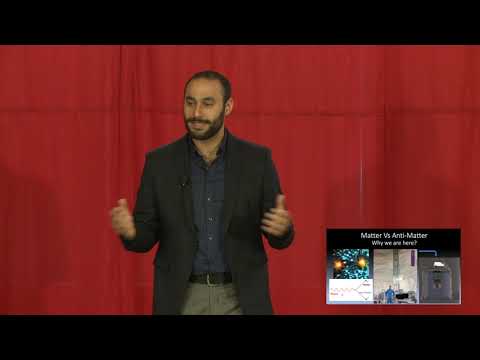
This research investigates why matter dominates over antimatter in the universe. By isolating xenon isotopes deep underground, scientists aim to detect rare nuclear reactions that could explain this imbalance. The work involves large-scale gas processing and long-term observation, potentially revealing fundamental insights into the origin of matter and existence.

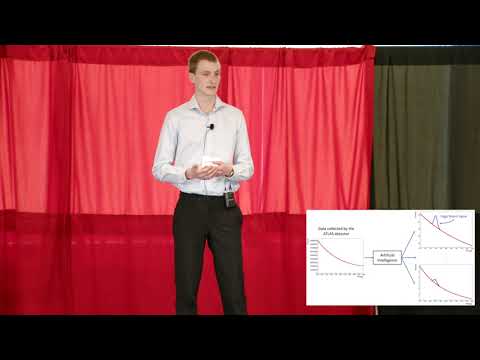
This research uses AI to detect subtle interactions between the Higgs boson and muons at the Large Hadron Collider. By refining large datasets, it aims to uncover how particles acquire mass at smaller scales. Confirming this interaction would deepen understanding of the Higgs field and fundamental physics.