This talk explains how devastating brain diseases such as Parkinson’s disease and dementia may begin not in the brain, but in the gut. The speaker describes how a protein called alpha-synuclein can change shape, form toxic complexes, and spread from cell to cell, traveling from the gut to the brain via neural connections. Once in the brain, these toxic complexes disrupt movement, memory, and thinking. The research identifies a key protein, FABP2, that promotes this harmful process by interacting with alpha-synuclein. By targeting and breaking this interaction early—at the level of the gut—the work aims to prevent neurodegenerative disease before irreversible brain damage occurs, potentially reducing patient suffering as well as medical and societal costs.
Researchers describe a simple strategy to slow Alzheimer’s disease by capping toxic tau protein chains. Inspired by a ring-stacking toy, they engineered spiky molecular “hats” that bind tau, halt aggregation, and reduce spread in cellular and postmortem brain models, suggesting broad potential across neurodegenerative disorders with future therapeutic promise worldwide.
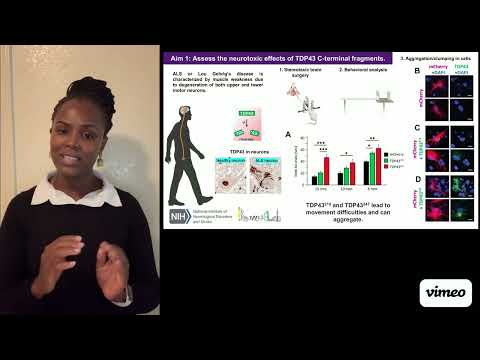
This research investigates toxic protein fragments involved in amyotrophic lateral sclerosis (ALS). By studying two TDP-43 fragments in mice and neurons, the work shows that specific fragments cause greater movement deficits and protein aggregation. Identifying the most harmful fragments advances understanding of ALS mechanisms and supports development of targeted neuroprotective therapies.