
Understanding how the brain controls behavior is key to studying neurological disease. This research introduces a high-speed robotic system that tracks mouse behavior in fine detail. By synchronizing precise behavioral data with brain activity recordings, it enables researchers to link specific neural regions to actions, improving insight into disorders like Parkinson’s and Alzheimer’s.
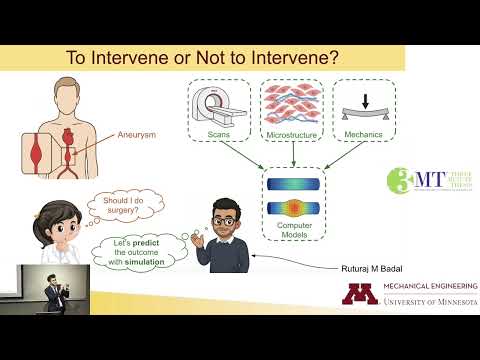
Aneurysms cause hundreds of thousands of deaths each year, yet most never rupture. This research applies vascular mechanics, medical imaging, and multiscale simulations to model how arteries grow and weaken over time. By predicting which aneurysms will burst, it aims to guide safer, patient-specific treatment decisions and prevent fatal outcomes.
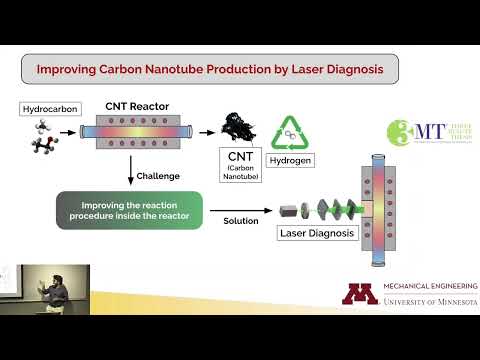
Hydrocarbons drive modern society but fuel climate change when burned. This research converts hydrocarbons into carbon nanotubes and clean hydrogen instead. Using laser diagnostics to probe reactors, it reveals how nanotubes form, enabling higher production rates, industrial decarbonization, and advanced materials for a sustainable, low-carbon energy future.
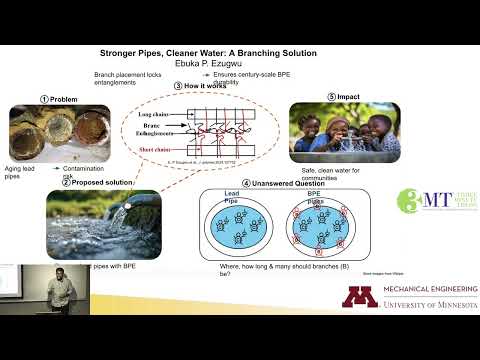
Millions of U.S. homes still rely on lead pipes, prompting a shift toward bimodal polyethylene replacements. This research examines how molecular branching affects pipe durability under chlorinated conditions. Using accelerated aging tests, it links polymer structure to long-term performance, guiding the design of safer, longer-lasting water pipes for future infrastructure.