This research develops electrostatic artificial muscles for underwater robots inspired by the movement of fish and sharks. Unlike noisy propeller-driven systems, these soft actuators enable quieter, more efficient swimming that minimises disturbance to marine ecosystems, offering a promising alternative for environmental monitoring, reef surveys, and underwater infrastructure inspection.
This dissertation presents temporal-difference learning methods for building world models that enable intelligent agents and robots to predict, plan and act. It introduces TD-MPC, which learns compact latent dynamics, rewards and value estimates for model-predictive control, and TD-MPC2, a more robust successor requiring little task-specific tuning. Experiments demonstrate faster real-world robot learning, scalable multitask performance and a unified model spanning 200 tasks across ten domains. The research also examines interactive generative world models and their tendency to hallucinate physically implausible futures. Targeted data collection in uncertain regions substantially reduces these errors, suggesting routes toward safer, uncertainty-aware autonomous systems and robotics.

2025
This research develops Roblonski, a compact robotic platform that automates photoredox chemistry using microscopic droplets and visible light. By reducing chemical use, waste, and manual effort by over 90%, it generates high-quality data for AI-driven discovery, paving the way for faster, greener, and more intelligent self-driving chemistry laboratories.
This research teaches AI to understand and generate the sense of touch by combining visual information with high-resolution tactile data. The technology enables realistic digital textures, improves online shopping, enhances virtual experiences, and creates accessible tactile graphics for blind and low-vision users, making AI more inclusive and human-centred.
This research develops scalable motion-planning algorithms that enable large teams of robots to work together safely and efficiently. By combining machine learning with search algorithms, the work delivers both speed and reliability, supporting applications from automated warehouses to disaster response, infrastructure repair, and future space exploration.

2026
This research explores how heterogeneous AI agents can establish common ground during collaboration. By separating communication and action into distinct decision-making policies, agents can engage in micro-conversations that create shared understanding. The work aims to improve teamwork among diverse robots and support future human-AI collaboration in complex environments.
This research develops brain-inspired computer chips using memristors, devices that can store and process information simultaneously like biological synapses. By enabling in-memory computing, the technology reduces energy consumption while supporting applications such as autonomous robots and image processing. The work advances efficient hardware for future artificial intelligence systems.
This research develops a distributed multi-robot task allocation framework that enables autonomous robots to estimate tasks, share information, coordinate assignments, and avoid collisions without relying on a central server. The approach improves efficiency, scalability, and resilience, with applications in emergency response, particularly supporting firefighters during life-saving operations.
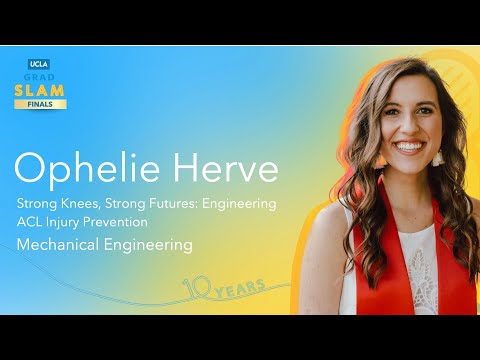
This research develops a robotic system capable of reproducing real-world knee motions and ACL injury mechanisms in human cadaver knees. The platform enables realistic testing of injury-prevention technologies, improves understanding of ACL rupture biomechanics, and may help reduce injury risk, particularly among women who experience higher ACL injury rates.
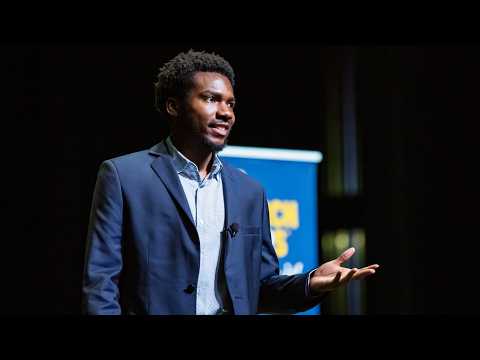
This research combines bio-inspired robotics and reinforcement learning to develop adaptable amphibious robots modeled after sea turtles. By learning through trial and error across diverse terrains, these robots can adjust their movement strategies in real time, improving performance in applications such as environmental monitoring, search and rescue, and agriculture.