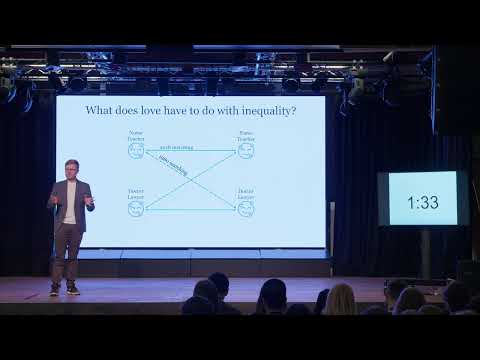
Partner choice increasingly reflects shared career aspirations, intensifying income inequality. Using Danish registry data and machine learning, this research shows assortative matching by education and career focus has risen since the 1980s. If pairing patterns had remained unchanged, today’s income inequality would be over 40% lower, highlighting family formation as a key economic force.


Using longitudinal data from 30,000 South Korean children, this study shows that child abuse significantly increases suicidal thoughts, especially with prolonged exposure. Crucially, strong social connections—such as team sports, supportive teachers, and caring neighbors—dramatically reduce this risk, highlighting social interaction as a key source of resilience.

This research investigates how children use the left and right hemispheres for language and spatial reasoning. Using ultrasound while children play custom games, it shows that those with the typical left-language/right-spatial pattern tend to have stronger skills. The findings reveal how brain-activity patterns relate to developmental risks and complex tasks like reading.