
This research explores how children's literature represents neurodiversity and how those representations shape children's sense of identity and inclusion. By gathering perspectives from readers and educators, the project aims to develop a reading programme featuring authentic, diverse stories so every child can see themselves reflected in literature.

2026
This thesis examined how adverse childhood experiences (ACEs) affect mental health and brain development. Using data from the ABCD Study, the researcher found that ACEs were linked to both mental health symptoms and a thicker prefrontal cortex. The findings suggest the brain may adapt to adversity, highlighting new questions about resilience.

This research explores how generative AI can create personalized reading materials based on autistic children’s special interests. Using AI-generated stories tailored to individual passions, the study examines effects on engagement and story retelling, suggesting that personalized, strength-based educational tools may improve reading experiences and accessibility for neurodivergent learners.

Pain-sensing neurons require the gene PRDM12 not only to develop, but also to maintain their identity in adulthood. Removing PRDM12 causes neurons to express mixed identities, disrupting function. Understanding how neuron identity is preserved may enable regeneration of pain-sensing neurons and lead to new, non-addictive pain treatments.
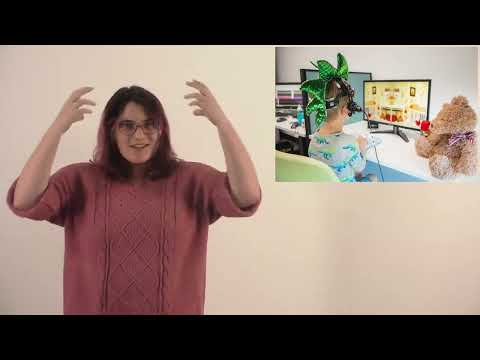
This research investigates how children use the left and right hemispheres for language and spatial reasoning. Using ultrasound while children play custom games, it shows that those with the typical left-language/right-spatial pattern tend to have stronger skills. The findings reveal how brain-activity patterns relate to developmental risks and complex tasks like reading.
2018
This research investigates genetic variants that influence how premature babies respond to infections and oxygen shortages—two major causes of brain injury. By analysing the DNA of over 200 premature infants, the study identifies variants linked to later movement and learning difficulties, aiming to enable earlier prediction, prevention, and personalised care.