
This research examines how older adults manage indoor environmental conditions while aging in place. It highlights the importance of “adaptive opportunities,” such as adjusting surroundings or behavior, and identifies barriers like mobility and cost. The goal is to develop practical strategies to improve comfort, health, and independence for aging populations at home.

This research highlights the limitations of current food safety detection and introduces nanoparticle-based smart packaging. These nanosensors detect gases from spoilage and signal safety through colour changes. By replacing guesswork with real-time indicators, this approach could prevent foodborne illness, improve consumer confidence, and modernise food safety in an increasingly technological world.
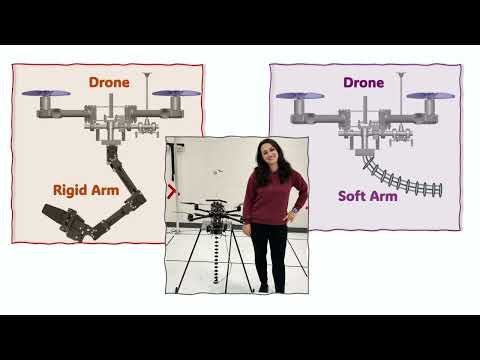
This research develops drones with soft robotic arms capable of safely grasping and transporting objects in challenging environments. By combining predictive modelling with visual feedback, it overcomes control challenges associated with soft materials. The work advances intelligent, adaptive aerial robotics for applications such as emergency delivery and hazardous environments.

This research develops a low-cost water-monitoring system using nanofabricated diffraction surfaces and image analysis. As water flows over a “rainbow film,” distinct optical patterns reveal chemical or biological contaminants. The system has already detected dyes, algae, and particulates, offering a rapid, affordable tool for identifying pollution in water pipelines.