This research explores how heterogeneous AI agents can establish common ground during collaboration. By separating communication and action into distinct decision-making policies, agents can engage in micro-conversations that create shared understanding. The work aims to improve teamwork among diverse robots and support future human-AI collaboration in complex environments.
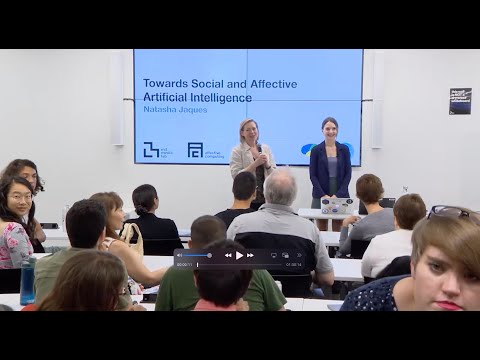
This PhD defense presents research at the intersection of machine learning, reinforcement learning, social learning, affective computing, and human-AI interaction. The thesis is that social learning is a powerful mechanism for intelligence and explores how AI agents can learn from one another and from humans. Projects include intrinsic social influence rewards for multi-agent coordination, communication protocols emerging through influence, conversational agents trained from implicit human feedback such as sentiment, generative models improved through facial-expression feedback, and personalized well-being prediction from behavioral and physiological data. The thesis concludes that socially informed learning can improve coordination, adaptability, and human alignment.