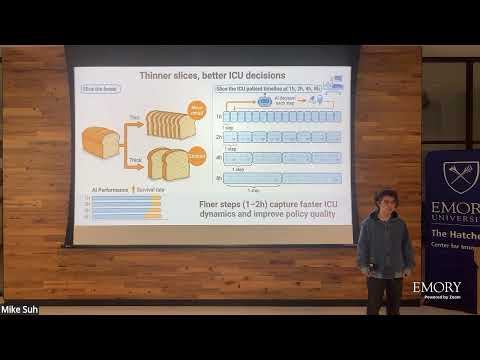
This research explores how heterogeneous AI agents can establish common ground during collaboration. By separating communication and action into distinct decision-making policies, agents can engage in micro-conversations that create shared understanding. The work aims to improve teamwork among diverse robots and support future human-AI collaboration in complex environments.

This research examines whether air pollution affects risk-taking behaviour. Using survey data from 40,000 Indonesians and satellite pollution measurements, it shows that higher pollution levels make people more risk-averse. Because risk preferences influence education, careers, entrepreneurship, and innovation, cleaner air may improve both health outcomes and economic decision-making.

This research investigates how the brain uses different decision-making strategies and how those strategies vary across individuals, including people with neurodivergent conditions such as autism, schizophrenia, and ADHD. Using controlled game environments and brain imaging, the study maps neural decision-making circuits to better understand cognition, behavioural diversity, and potential therapeutic interventions.

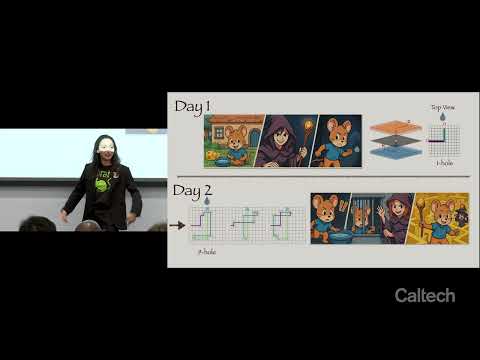
This research uses the Manhattan maze to study rapid learning and memory in mice. The study demonstrates that mice can acquire complex navigation sequences after only a few rewards, retain memories overnight, and generalize learned strategies to new mazes. The findings provide insights into few-shot learning, memory formation, and adaptive intelligence.

This neuroscience research investigates how the human brain constructs and adapts goals. Using fMRI and a dynamic decision-making game, the study identifies neural activity in the prefrontal cortex and anterior cingulate cortex associated with goal selection, valuation, and adaptation. The findings may help develop AI systems better aligned with human goals.

This neuroscience research investigates how the brain assigns value during decision-making. Using low-intensity focused ultrasound and human single-neuron recordings, the study examines the ventromedial prefrontal cortex and its role in transforming perception into choices. The findings may improve understanding of disorders such as obsessive-compulsive disorder and maladaptive decision-making.

This research examines how leadership behavior influences high-stakes decision-making in maritime operations. It highlights how human factors under pressure shape risk perception and outcomes, often more than technical systems. The study proposes a behavior-based decision framework to improve safety, efficiency, and cost-effectiveness in complex, high-risk environments at sea.

This research explores procrastination by examining how people relate to their future selves. Using guided mental imagery exercises, it aims to strengthen emotional connection with the future self. Improved connection may reduce procrastination, helping individuals make better decisions today to achieve long-term goals and enhance overall well-being.

This research examines how CEO personality influences environmental decoupling, where companies misalign environmental claims and actions. Using the Big Five framework and machine learning on CEO communications, it identifies traits linked to such behavior. Findings aim to improve corporate governance by helping stakeholders select leaders committed to genuine sustainability.