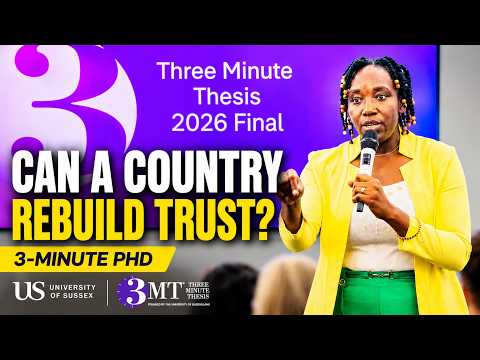
Nigeria’s international reputation can disadvantage entrepreneurs through a “liability of origin.” Interviews with 12 nation-branding practitioners and policymakers show that trust cannot be repaired quickly through slogans. Credible nation branding requires managing tensions between promises and delivery, and between demands for rapid reputational improvement and the slow pace of institutional reform.
2025
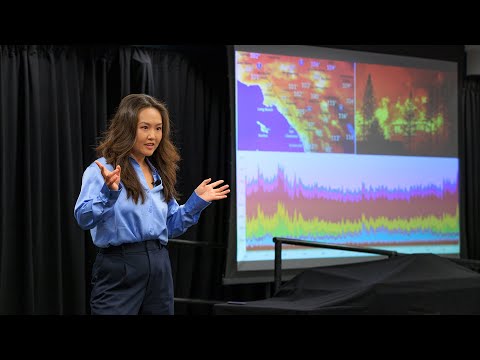
This research uses functional regression to forecast how climate change will affect electricity demand across California. By modeling complete demand patterns rather than isolated data points, it aims to help design smarter, more resilient, and more equitable power grids that reduce outages during increasingly frequent heatwaves and extreme weather.

2025
This research examines how changing reproductive laws affect access to IVF following the Alabama embryo personhood ruling. Using interviews, observation, and policy analysis, it reveals how legal uncertainty threatens fertility treatment, reproductive autonomy, and healthcare access, while informing policies that better protect reproductive rights and family-building opportunities.

This research develops a new econometric method that captures complex, non-linear relationships while accounting for hidden differences between firms. Applied across 50 industries, it reveals that traditional models underestimate R&D investment by up to 8%, enabling more accurate economic predictions and better-designed innovation, taxation, and regulatory policies.

2026
This research investigates how the EU's Carbon Border Adjustment Mechanism (CBAM) could reshape UK manufacturing investment. By analysing multinational firms and environmental trade policies, it aims to identify when green regulations encourage companies to invest in the UK, helping policymakers attract sustainable industries, create jobs, and reverse long-term industrial decline.
2026
This research evaluates India's Make in India industrial strategy, tracing its evolution from post-independence economic policy to modern manufacturing and technology initiatives. It finds that infrastructure investment, targeted incentives, and international partnerships have delivered mixed successes, while regulatory complexity and implementation challenges continue to limit broader economic transformation.

2026
This research explores why former human traffickers in Indonesia stopped offending. Through interviews with ten ex-traffickers, the study found that marriage and parenthood often triggered moral transformation by creating empathy and shame. The findings suggest trafficking prevention should focus not only on punishment, but also on strengthening families and social bonds.

2026
This research investigates whether increasing female political representation affects labour market participation and education outcomes. Using electoral reforms in Italy as a natural experiment, the study finds that greater female representation increased workforce participation among working-age women while encouraging younger women to remain in education, demonstrating broader economic and social effects of political representation.

2026
This research examines how the location of affordable housing shapes access to opportunity. Using mixed methods, the study evaluates whether state-created opportunity maps influence where affordable housing developments are built. The work highlights how housing policy affects access to education, transportation, employment, and long-term social mobility for low-income residents.

2026
This research examines how alcohol affects the severity and outcomes of suicide attempts among military service members and veterans. By analyzing documented attempts and personal narratives, the study reveals that alcohol often increases impulsivity and lethality, while occasionally interrupting attempts unintentionally, highlighting the need for alcohol-aware suicide prevention strategies.