
This research investigates how the structure of comb polymers influences their ability to stabilize materials in applications ranging from fragrances and food products to wastewater treatment and drug delivery. By systematically modifying polymer architecture, the study identifies design rules that enable more effective, affordable, and targeted performance across diverse industrial and medical uses.
2026
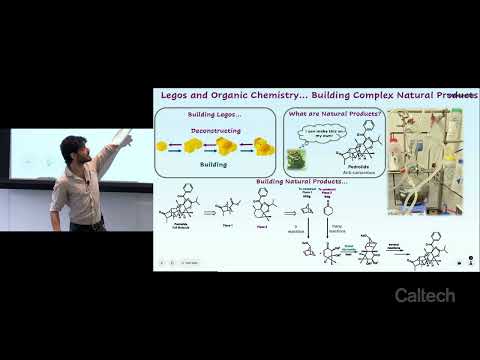
This research focuses on the total synthesis of natural products, biologically important molecules produced by nature. Using pedrolide, an anticancer compound, as a case study, the work applies strategic molecular “deconstruction” to identify simple building blocks and develop laboratory methods for assembling complex natural molecules through innovative organic chemistry.

This research addresses the trade-off between sustainability and performance in plastics. By developing a “molecular spring” derived from biomass, the work strengthens biodegradable materials like PLA and enables multifunctional bioplastics. The goal is to create durable, convenient, and sustainable alternatives that support a circular economy without sacrificing everyday usability.

This research improves fluorescent imaging by enhancing the brightness of long-wavelength dyes. By encapsulating flexible squaraine dyes within macrocyclic rings, molecular motion is restricted, reducing energy loss and increasing light emission. The result is brighter, clearer imaging, enabling better visualization of biological structures such as cells and cancer tissue.

This research develops improved catalysts that convert atmospheric carbon dioxide into sustainable fuel. By analysing how molecular design affects reaction efficiency, selectivity, and durability, the work creates strategies to accelerate the chemical process and prevent breakdown. The findings support large-scale renewable energy storage and help integrate clean fuels into future energy systems.