This research advances artificial photosynthesis by developing a dual-function “two-way” material that combines electrical conductivity and CO₂ adsorption. By pairing this material with simple powder-based fabrication, the study achieves dramatically improved reaction speed and efficiency, enabling scalable, sustainable carbon-neutral energy systems.

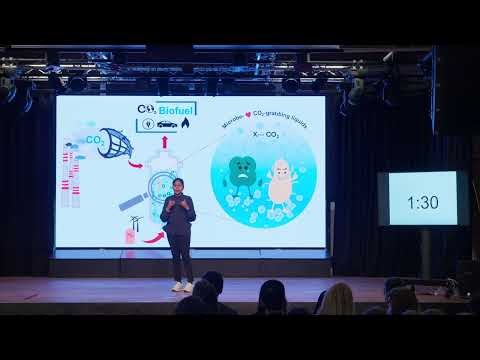
Current CO₂ capture methods are inefficient and harmful to microbes used for biofuel production. This research studies how CO₂-capturing liquids damage fuel-producing microbes and identifies tolerant strains. By understanding microbial responses at the genetic level, it aims to design microbe-friendly capture systems that convert carbon dioxide into useful fuels.

This talk explains magnetic refrigeration, a sustainable cooling technology that uses magnetocaloric materials to generate heating and cooling through controlled changes in magnetic and lattice entropy. The research focuses on tuning Curie temperatures—especially via cobalt substitution—and understanding first- vs second-order transitions to design efficient, environmentally friendly refrigeration materials.

This research develops improved catalysts that convert atmospheric carbon dioxide into sustainable fuel. By analysing how molecular design affects reaction efficiency, selectivity, and durability, the work creates strategies to accelerate the chemical process and prevent breakdown. The findings support large-scale renewable energy storage and help integrate clean fuels into future energy systems.

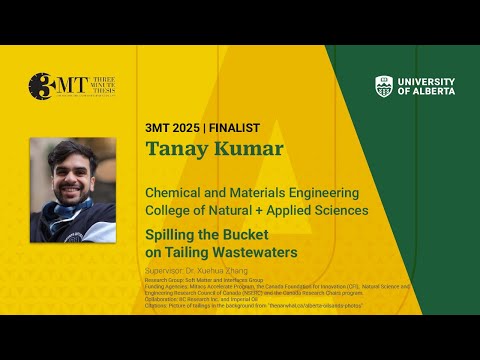
Athabasca tailings wastewater spans over 1.2 trillion litres, growing daily and damaging ecosystems. Current evaporation methods are slow and costly. This research introduces a simple, low-cost device using cotton towels and solar-heated thin-layer evaporation, increasing evaporation by 400%. The approach could help reclaim contaminated land and restore natural habitats.

This research uses atomic-scale computer simulations to design safer, more efficient battery electrolytes. By modelling ion movement like a “river” inside a battery, the project identifies top-performing materials before laboratory testing. The goal is to create faster-charging, higher-capacity, non-toxic batteries that support global renewable-energy transitions and a net-zero future.