
This research investigates whether replacing meat with fish could improve nutrition while supporting more sustainable diets. Modelling UK and Irish dietary data found that replacing even 25% of meat increased intake of key nutrients, including vitamin D, omega-3, selenium, and iodine, suggesting simple dietary swaps could benefit health and sustainability.
2025
This research investigates the natural biochemical defences that allow some maize plants to resist devastating fungal diseases. Using metabolomics, it identifies protective compounds produced by resistant plants and links them to specific genes. The findings could enable breeders to develop naturally disease-resistant crops, reducing reliance on costly and environmentally harmful fungicides.
2026
This research develops biodegradable “living” water filters grown from kombucha cellulose membranes. Unlike conventional plastic filters, these biofilters can self-defend against harmful microbes and self-repair when damaged. The work aims to create affordable, sustainable, and effective water filtration systems that reduce plastic waste while improving access to clean drinking water.

This research addresses the trade-off between sustainability and performance in plastics. By developing a “molecular spring” derived from biomass, the work strengthens biodegradable materials like PLA and enables multifunctional bioplastics. The goal is to create durable, convenient, and sustainable alternatives that support a circular economy without sacrificing everyday usability.

This research transforms wood waste into bio-based protection agents for construction timber. Using green extraction methods and enzymatic modification, natural compounds are isolated and enhanced to replace toxic chemical treatments. Laboratory testing confirms their antimicrobial, antioxidant, and weather-resistant properties, supporting sustainable wood protection and circular economy principles.
2025
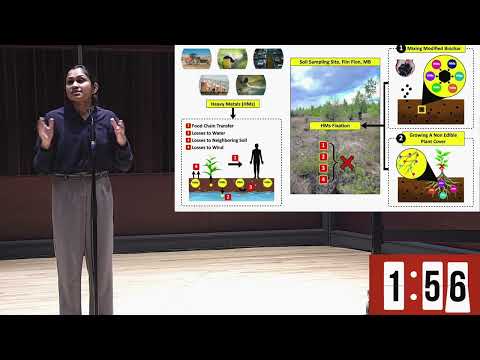
Heavy metal contamination in boreal forest soil particularly by Cadmium (Cd), Copper (Cu), Lead (Pb), and Zinc (Zn) is an environmental issue associated with mining. Heavy metal contaminated soil causes food chain contamination, detrimental effects on humans, contamination of natural waters and impairment of plant growth. Chemical immobilization combined with phytostabilization is a promising remediation strategy of heavy metal contaminated soil. In this technique, various kinds of amendments are added to soil which immobilize heavy metals whereas an established vegetation cover stabilizes heavy metals within the rhizosphere zone. This project will assess the effectiveness of modified biochar as amendments in immobilizing Cd, Cu, Pb, Zn in acidic boreal forest soils with different levels of concentrations. Additionally, it will evaluate the phytostabilization potential of native Canadian grass species to reduce mobility and bioavailability of these heavy metals contributing to development of effective remediation measures in multi-metal contaminated boreal forest ecosystems.

This research develops sustainable screen materials using nanoscale “sponges” that trap light-emitting molecules. By converting these materials into ultra-thin nanosheets, the study offers brighter, longer-lasting, and energy-efficient alternatives to toxic, non-renewable screen components, reducing environmental impact while supporting future global screen demand.

This research investigates how forest soil health underpins resilience to climate change in Nova Scotia. By analyzing physical, chemical, and biological soil properties across diverse sites, the project develops a soil health framework to guide forest management, enhance carbon sequestration, and improve long-term ecosystem resilience.

This research explores human motion as a renewable energy source using nanogenerators made from nanomaterials. By converting everyday body movement into electricity, the work demonstrates a novel, sustainable approach to reducing reliance on fossil fuels and supporting a cleaner energy future.

This research develops improved catalysts that convert atmospheric carbon dioxide into sustainable fuel. By analysing how molecular design affects reaction efficiency, selectivity, and durability, the work creates strategies to accelerate the chemical process and prevent breakdown. The findings support large-scale renewable energy storage and help integrate clean fuels into future energy systems.