This research examines why undergraduate engineering students struggle with troubleshooting technical problems. By observing electrical engineering students fixing broken circuits, he aims to identify where they get stuck, compare their approaches with expert strategies, and develop classroom exercises that build practical troubleshooting skills for labs, projects and real-world engineering work.
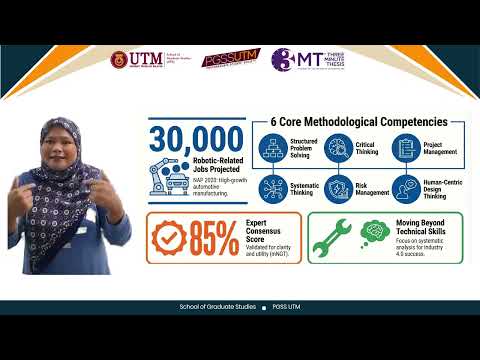
This research addresses the growing skills gap in Malaysia’s automotive robotics sector. It develops a competency framework emphasizing problem-solving, critical thinking, and structured methodologies. Validated by experts, the framework aligns education with industry needs, helping graduates better prepare for automation-related jobs and improving workforce readiness in a rapidly evolving industry.
This talk reframes mathematics as a creative, pattern-based discipline rather than rote calculation. Through research in topology and prison education initiatives, it highlights math’s role in fostering curiosity, resilience, and critical thinking. The speaker argues that mathematical thinking benefits everyone, promoting perseverance and empathy beyond academic or professional contexts.
This research develops a new way to measure mathematical language by integrating words, symbols, and graphs. Through experimental tasks, it shows that these skills predict mathematical performance. The findings highlight the importance of teaching connections between representations, with implications for improving mathematics education and understanding how language shapes learning.
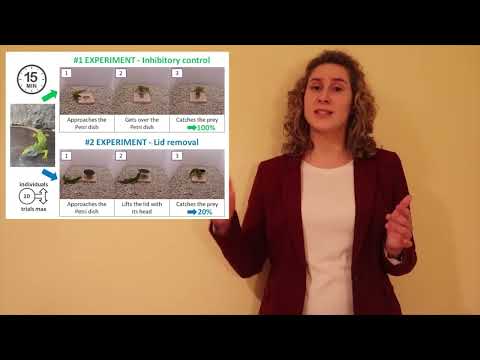
This research tests cognitive abilities in European green lizards using inhibitory control and problem-solving tasks. All males solved the detour challenge, and two solved the more complex lid-removal task, demonstrating that reptiles have developed learning abilities. The study advances understanding of reptile cognition and its role in the evolution of animal intelligence.