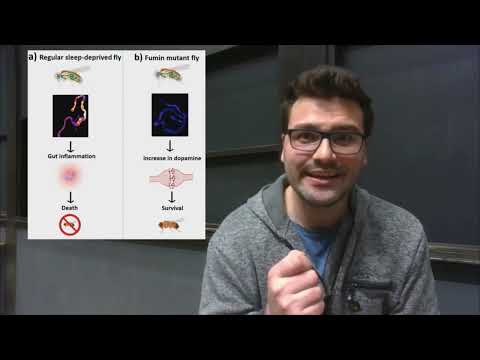
Fruit flies normally die from sleep loss due to lethal gut inflammation. But a mutant “fumin” fly, which sleeps very little, survives without inflammation. This research investigates how altered dopamine processing protects these flies, offering insight into why sleep is essential and how sleep loss contributes to disease.
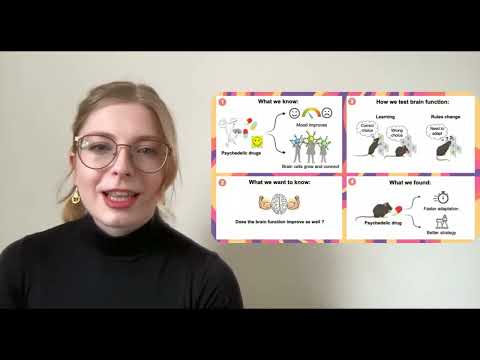

This research tests whether psychedelics improve adaptability in mice. After learning reward rules, mice with a single psychedelic treatment relearned new rules faster and used more information—learning not only from rewards but also from missed rewards. The findings suggest psychedelics enhance behavioral flexibility, offering clues for developing future mental health treatments.

This research explores neural remodeling—the process by which neurons form new connections after spinal cord injury. Using mouse models, the work identifies genes involved in detour pathways and enhances them through gene therapy, strengthening recovery. The goal is to develop future treatments that improve functional outcomes for people with central nervous system injuries.

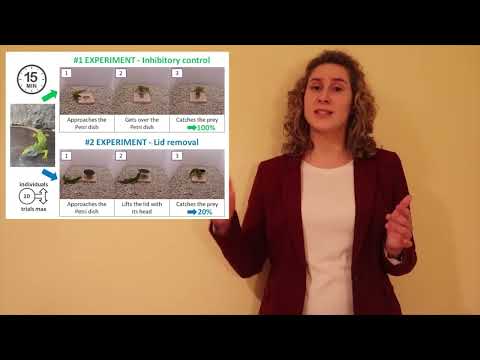
This research tests cognitive abilities in European green lizards using inhibitory control and problem-solving tasks. All males solved the detour challenge, and two solved the more complex lid-removal task, demonstrating that reptiles have developed learning abilities. The study advances understanding of reptile cognition and its role in the evolution of animal intelligence.

This research examines unexpected beauty-quark decay patterns observed at LHCb that violate Standard Model predictions. The anomalies suggest a new force and a hypothetical leptoquark particle that couples mainly to third-generation matter. By modelling these effects, the work guides experimental searches and may shed light on the long-standing mystery of particle-generation hierarchies.

This research tests whether positive, therapy-induced epigenetic changes can be inherited. Using mice with genetic eye disease, the team applies a successful treatment, checks for vision improvement, examines resulting DNA chemical marks, and studies whether offspring inherit these beneficial modifications. Findings could reshape our understanding of therapy and generational health impact.

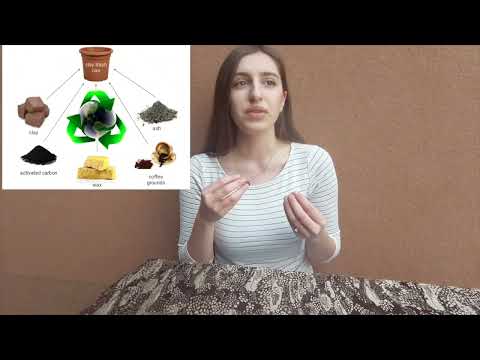
This project develops an odor-absorbing, environmentally friendly garbage bin made from clay, beeswax, and activated carbon. The porous carbon layer captures unpleasant smells, slowing detectable decomposition compared to standard bins. Future work will test waste-derived additives and create new sustainable containers to promote selective waste collection and environmental awareness.

This research investigates how T cells influence microglial behavior in Alzheimer’s disease. Using a mouse model, the study found that removing T cells did not alter amyloid-beta plaques but unexpectedly led to healthier microglial activity and reduced myelin damage. The findings suggest T cells may worsen neurodegeneration and reveal new therapeutic avenues.