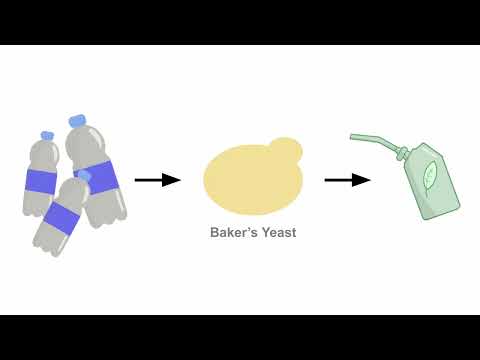
This research engineers yeast to convert PET plastic waste into valuable chemicals like PCA, enabling the production of biofuels, pharmaceuticals, and biodegradable materials. By transforming low-value plastic into high-value products, it offers a scalable biotechnological solution to reduce pollution and support the transition to sustainable, circular economies.

Glass lenses are essential for space missions but can’t currently be manufactured or repaired in space. This research engineers E. coli to grow silica-based “living glass” inspired by sea sponges, then tests bacterial growth and lens-like behavior under simulated microgravity using a random positioning machine and custom onboard imaging modules to enable tunable, self-assembling optics.
2025
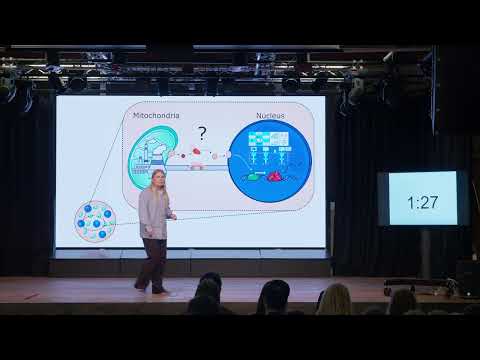
Mitochondria power cells and communicate with the nucleus to control gene expression. This research builds minimal artificial cells containing only mitochondria and nuclei to isolate this signaling pathway. The system reveals how mitochondrial dysfunction alters gene expression, offering new insight into mechanisms underlying cancer and neurological diseases.
The speaker develops RADARS, a programmable RNA-guided gene-delivery system that activates only in cells with specific RNA “fingerprints.” Their thesis tackles weak activation when target RNA is rare, creating new mechanisms to bind targets more tightly. These innovations aim to enable safer, cell-specific cancer therapies through precise molecular control.

2025
IBD patients have weakened gut microbes, leaving them with chronic inflammation and limited treatment options. This research engineers probiotic yeast with anchors, drug-carrying “backpacks,” and reprogrammed DNA to deliver targeted therapeutics safely and cheaply. Early results show these modified microbes could become effective, low-side-effect treatments for IBD and other gut diseases.
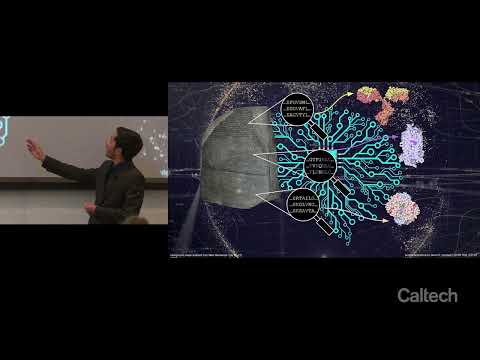
The talk describes using AI language models to decipher the hidden “languages” within millions of natural protein sequences. By learning protein vocabulary, syntax, and grammar, researchers can design new molecules that fight cancer, degrade plastics, capture carbon, and expand biology beyond nature’s rules—advancing medicine, sustainability, and molecular engineering.
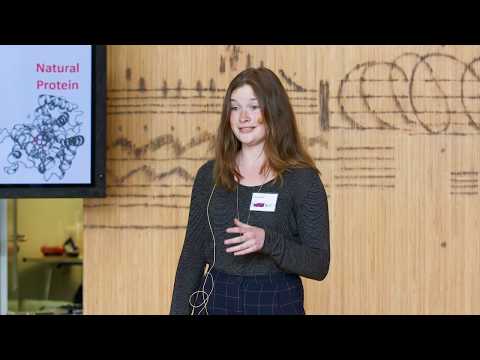
This research designs simplified, custom-built proteins to understand how natural proteins work and to create new biocatalysts. By choosing a desired function and designing the amino-acid sequence and structure from scratch, the project aims to develop clean, efficient protein-based alternatives to environmentally harmful industrial chemistry.
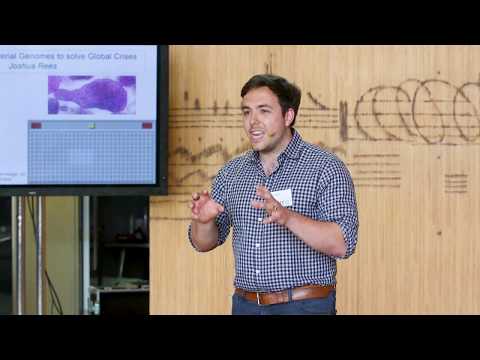
This research develops a Minesweeper-inspired algorithm to identify and remove non-essential genes from Mycoplasma genitalium, the smallest known self-replicating organism. The algorithm eliminated 35% of the genome in simulation, offering a path to record-breaking minimal cells and improving bacterial strains used to produce antibiotics, vaccines, fuels, and climate-solution technologies.