
This research examines how maternal self-efficacy develops during matrescence, the transition to motherhood. Through interviews with new mothers and analysis of the SPACE programme, it shows that confidence in parenting grows not from perfection but from supportive environments, highlighting the need to rebuild community support for new mothers.

2025
This dissertation develops brain-charting methods to support precision psychiatry and neurology by measuring how an individual’s brain differs from population norms. Using normative modelling, it replaces conventional case-control averages with personalised deviation scores across age and disease progression. The research introduces warped normative models for non-Gaussian imaging data and multivariate extreme-value methods for identifying unusual patterns across brain regions. Applications to rare copy-number variants and Parkinson’s disease reveal individual differences obscured by group averages. The defence also examines longitudinal monitoring, environmental influences, resilience, ethics, stigma and clinical implementation, while emphasising that brain deviations alone cannot define pathology or determine treatment.

2026
This research investigates whether zinc plays a critical role in the ability of psychedelic drugs to reopen social reward critical periods in the brain. Using mouse models, the study examines how zinc influences social behavior following psychedelic treatment, potentially revealing mechanisms of brain plasticity relevant to autism, social anxiety, and social connection.

2026
This thesis examined how adverse childhood experiences (ACEs) affect mental health and brain development. Using data from the ABCD Study, the researcher found that ACEs were linked to both mental health symptoms and a thicker prefrontal cortex. The findings suggest the brain may adapt to adversity, highlighting new questions about resilience.

2026
This research investigates how differences in butterfly behavior relate to brain evolution and memory. Heliconius butterflies showed superior long-term memory and enlarged mushroom body brain regions compared with related species. The work explores how neurogenesis shapes cognition and may ultimately contribute to understanding memory, brain development, and neurological disorders.

2015
This research investigates how bisphenol A (BPA), a common plastic chemical, may contribute to obesity. By disrupting hormonal systems during brain development, BPA alters appetite regulation and metabolic set points. Animal studies show increased obesity and diabetes risk, suggesting environmental chemicals may play a significant role in the obesity epidemic.

This study examines how children process the speech envelope, a key acoustic feature of language. Brain data from ages 4–18 reveal a developmental shift from left- to right-hemisphere processing. This newly identified trajectory may help detect language impairments and improve early interventions in speech and language development.

This research examines how stress during adolescence produces lasting, sex-specific cognitive effects in adulthood. Using an animal model, the work replicates learning and attention deficits seen in humans and investigates cellular communication mechanisms underlying these changes, with the goal of reducing the long-term cognitive impact of adolescent stress.

Drawing on personal experience with depression and anxiety, this researcher studies synaptic adhesion molecules—key proteins that shape how neural connections form and adapt. By understanding how these molecules change across development, the work aims to uncover molecular mechanisms behind neuropsychiatric disorders and inform future treatments or prevention strategies.
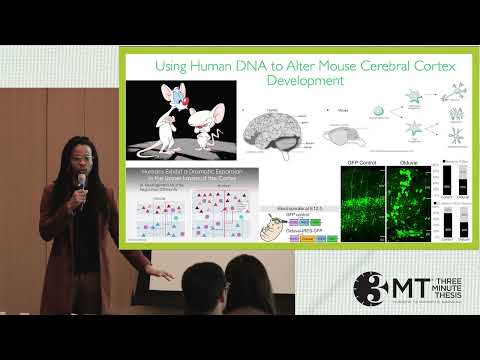
This research inserts a human-specific DNA sequence into mice to study cerebral cortex development. The modified mice show increased upper-layer neurons and glial cells, revealing how human brain evolution supports higher cognition. These findings improve understanding of human brain specialization and the origins of neurological disorders.