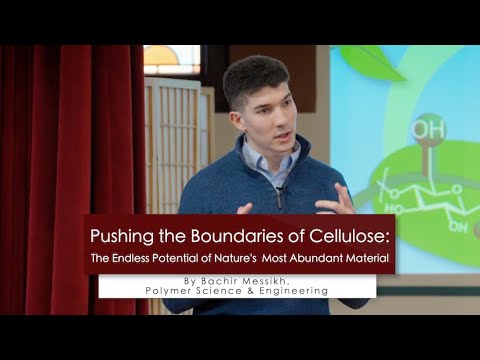
This research develops a new chemical process for modifying cellulose while keeping it in water, overcoming longstanding compatibility problems between cellulose and oil-soluble molecules. The method enables cellulose to incorporate electronic and pharmaceutical components, opening pathways toward sustainable electronics, advanced materials, targeted medicines, and greener technologies based on renewable natural resources.

This research advances artificial photosynthesis by developing a dual-function “two-way” material that combines electrical conductivity and CO₂ adsorption. By pairing this material with simple powder-based fabrication, the study achieves dramatically improved reaction speed and efficiency, enabling scalable, sustainable carbon-neutral energy systems.

This research explores how rearranging atoms in crystal thin films can radically change material behavior. By engineering strain and atomic orientation in lanthanum strontium manganite films, the work links structure to electrical and magnetic properties, enabling the design of custom materials for next-generation electronics and computing technologies.