This research examines whether air pollution affects risk-taking behaviour. Using survey data from 40,000 Indonesians and satellite pollution measurements, it shows that higher pollution levels make people more risk-averse. Because risk preferences influence education, careers, entrepreneurship, and innovation, cleaner air may improve both health outcomes and economic decision-making.
This research develops a physics-based method for measuring lung elasticity from medical imaging to predict which emphysema patients will benefit from lung valve treatment. By creating detailed elasticity maps, the work aims to improve treatment selection, enhance patient outcomes, and provide new quantitative tools for assessing lung health.
2025
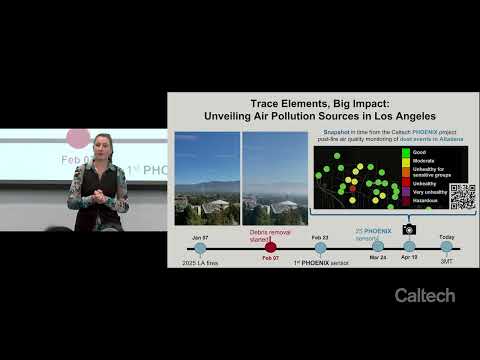
This research investigates atmospheric trace elements as indicators of pollution sources, focusing on toxic metal emissions from urban firestorms during the Eaton Canyon and Palisades fires. Elevated airborne lead concentrations prompted the creation of Phoenix, a community-based post-fire air monitoring network designed to track hazardous dust resuspension during debris cleanup.
2026
This research uses low-cost air quality sensors to monitor pollution exposure in underserved communities in Philadelphia. It reveals unexpected indoor and temporal pollution patterns and highlights disparities in exposure. By involving residents as citizen scientists, the study demonstrates how accessible data can inform policy and improve public health outcomes.
This research examines Rotterdam’s urban tree planting practices and their impact on air quality and drought resilience. Findings show that current reliance on single-species tree lines reduces resilience, while greater species and functional diversity improves pollutant removal and climate adaptability. The study recommends transitioning to mixed-species, biodiversity-focused urban forestry strategies.