This research develops a high-resolution chemical method for analyzing tree rings to reconstruct past climates and ecosystem responses. By measuring atomic-scale chemical variations within cellulose molecules, the study separates environmental signals from biological responses, enabling more detailed understanding of historical climate change, plant physiology, and long-term ecosystem adaptation.
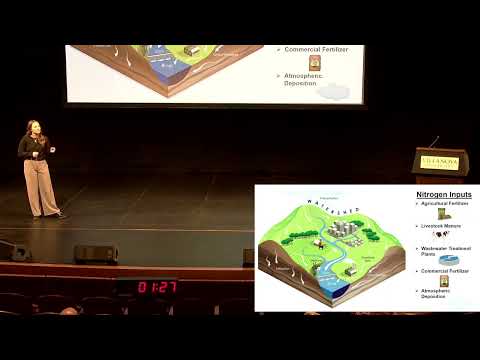
This study investigates how streams retain “memory” of nitrogen pollution from past land use. Using long-term data, it identifies a 3–5 year lag between nitrogen inputs and water quality impacts. It highlights the role of forests as natural filters and emphasizes managing both current and historical pollution to protect water supplies.

This research investigates how nitrogen pollution influences the reproduction and northward migration of black mangroves under climate change. Increased nitrogen boosts reproduction, potentially accelerating coastal expansion. As mangroves protect shorelines from erosion and storms, understanding these dynamics is crucial for environmental management and climate adaptation strategies.
This research investigates methane emissions from restored marshes as a climate solution. While marshes sequester CO₂, their methane output varies widely. By measuring emissions and environmental factors, the study examines how interactions influence outcomes, highlighting that restoration can aid climate mitigation but requires deeper understanding to ensure effectiveness.
This research develops stable-isotope tools to measure how microbes—the Earth’s “lungs”—breathe CO₂ in and out. Microbes are massively abundant and shape global climate. Findings show deep subsurface environments slowly emit CO₂, a process that may influence future climate dynamics as human-driven environmental changes accelerate.