This research develops low-cost gallium arsenide solar-cell manufacturing to accelerate global decarbonization. Gallium arsenide absorbs light far more efficiently than silicon, potentially enabling cheaper and less capital-intensive solar production. By improving scalable manufacturing methods, the work aims to reduce the cost of expanding renewable-energy infrastructure needed to combat climate change.

This research improves climate prediction models by developing advanced computational methods for simulating cloud microphysics. By tracking more detailed information about cloud droplets and aerosol interactions, the work enhances understanding of how clouds influence Earth’s energy balance, rainfall, and climate change, helping reduce uncertainty in long-term global climate projections.

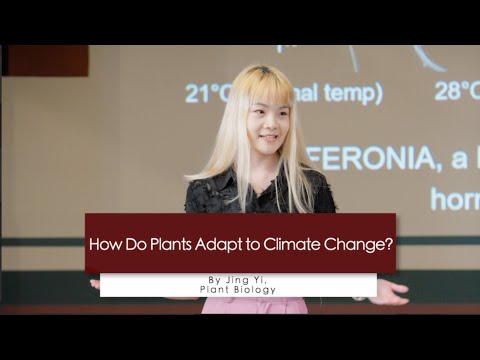
This research investigates feronia, a plant protein essential for heat adaptation. By studying how feronia regulates auxin signaling and plant growth under temperature stress, the work aims to uncover mechanisms that could support the development of heat-resilient crops, improving agricultural productivity and food security in a warming global climate.

This research develops cavity-based methods for controlling thermal radiation by transforming random heat emission into coherent, directional thermal beams. Unlike traditional narrowband approaches, the technique enables broadband heat control using practical materials such as silicon and germanium, with potential applications in energy efficiency, waste-heat recycling, cooling technologies, and climate mitigation.

Pakistan is highly vulnerable to climate change due to low forest cover, rising temperatures, glacier melting, floods, droughts, and agricultural decline. With only 4.2 million hectares of forest, impacts are severe. Government initiatives like the 10 Billion Tree Tsunami and mangrove restoration aim to improve resilience and environmental sustainability.