This research investigates the diversity and behaviour of zooplankton around Rangitāhua, Aotearoa New Zealand. By combining microscopy and underwater acoustics, it identifies species and tracks their daily vertical migrations. The findings will improve understanding of marine ecosystems, climate change impacts, and support Ngāti Kuri's stewardship of this culturally significant region.
This research investigates how coccolithophores—microscopic marine algae that both absorb and release carbon dioxide—have influenced Earth's carbon cycle over the past three million years. Using fossil sediments, geochemistry, and machine learning, it reconstructs past ocean ecosystems to improve predictions of how marine carbon cycling will respond to future climate change.
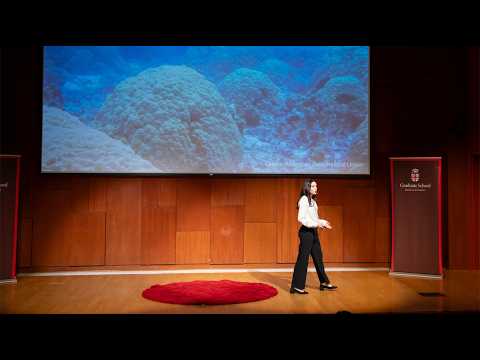
This research reconstructs 200 years of El Niño–Southern Oscillation (ENSO) variability using oxygen isotope records preserved in corals from Christmas Island. By combining coral archives, modern ocean observations, and climate models, it improves understanding of how ENSO is responding to anthropogenic climate change and enhances predictions of future climate extremes.
2025
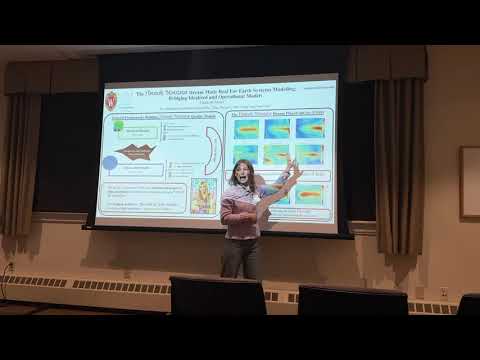
This research develops a machine-learning and data-assimilation framework that combines idealized and operational Earth systems models into a high-resolution, physically realistic “bridging model.” Applied to the El Niño–Southern Oscillation, the approach improves climate simulation accuracy while enabling exploration of alternative climate regimes and physically consistent what-if scenarios.
2026
This research examines how different sea turtle species uniquely shape marine ecosystems through their feeding behaviors. Studying green, loggerhead, and Kemp’s ridley turtles along Florida’s Gulf Coast, the work reveals species-specific ecological functions involving seagrass grazing, sediment mixing, and food web interactions that contribute to ecosystem resilience and coastal conservation.