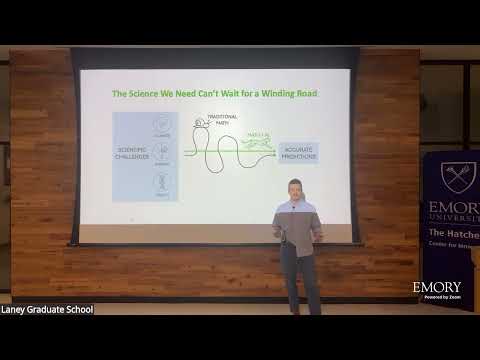
This research uses artificial intelligence to accelerate scientific simulations by learning patterns from traditional mathematical models. Rather than replacing physics, the AI predicts efficient starting points for complex calculations, producing accurate results much faster. The approach could dramatically speed up research in fields such as medicine, engineering, and climate science.

2025
This research introduces the first simple mathematical model capable of capturing the cooperative folding of alpha helices, a fundamental protein structure. By revealing how these proteins fold, stabilize, and misfold, the model offers new insights into diseases such as Alzheimer's and Parkinson's while providing a fast, flexible platform for protein research.

This research applies fluid mechanics, numerical simulations, and machine learning to model the brain’s waste-clearance system during sleep. By investigating how fluid moves through brain tissue and how aging or injury affect this process, the work aims to identify strategies for preventing or slowing neurodegenerative diseases such as Alzheimer's.