This research investigates how wind transports sand across Mars to improve the safety of future space missions. Combining measurements from Earth-based analogue dunes with computational modelling and NASA satellite data, the approach predicts Martian winds and sandstorms with high accuracy, potentially reducing landing risks and supporting future human exploration of Mars.
2025
This research combines galaxy simulations with machine learning to study the invisible gas surrounding galaxies. By training a neural network to interpret astronomical observations, the project creates a public tool—the Circumgalactic Dictionary—that enables previously impossible measurements, advancing our understanding of galaxy evolution and the origins of stars, planets, and life.
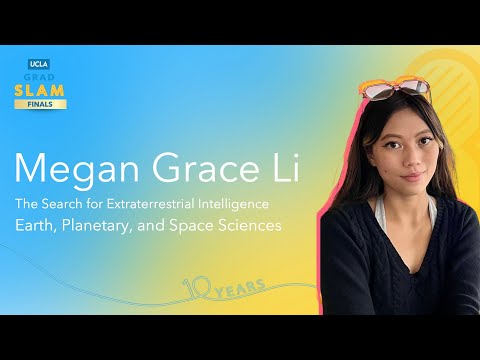
This research uses artificial intelligence and astronomical data to search for signs of extraterrestrial intelligence. By applying anomaly-detection techniques to telescope images, the project identifies unusual signals or patterns that may indicate intelligent activity, with the ultimate goal of detecting and decoding potential messages from civilizations beyond Earth.
This research investigates how painted turtles survive months without oxygen through epigenetic regulation. By identifying gene-switching mechanisms, it aims to uncover biological strategies for extreme hypoxia tolerance. These insights could inform medical, environmental, and space applications, potentially extending human survival in low-oxygen conditions and advancing fields like transplantation and exploration.
Directly imaging Earth-like exoplanets is one of astronomy’s greatest challenges. Using GLINT, an interferometric instrument on the Subaru Telescope, this research cancels overwhelming starlight to reveal faint nearby planets—paving the way toward discovering another “pale blue dot” and possibly a second Earth.
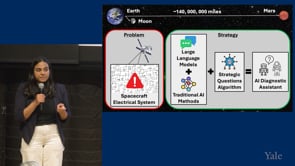
This research develops an onboard AI diagnostic assistant for space missions that can independently investigate life-critical anomalies. By learning how humans ask strategic diagnostic questions, the system combines language models and traditional AI to actively reason through unprecedented spacecraft failures when communication with Earth is delayed.
This research explores swarms of small, modular robots that cooperate like ant colonies to perform complex tasks. Using control theory, optimization, and machine learning, the work enables resilient, energy-efficient robotic systems that adapt in real time, with applications ranging from disaster response and space exploration to medical technologies.
This research aims to make space travel cheaper by creating reusable rocket engines. Current engines overheat to destructive levels, but simulations show that adjusting the fuel–oxygen ratio can cool them without losing power. By preventing long-term damage, engines can be reused, lowering launch costs and expanding access to space exploration.

The researcher studies how clouds on distant exoplanets affect their climates and potential for life. Working with NASA, they model how exotic materials—like iron or sapphire clouds—absorb and reflect light. They found particle shape greatly influences temperature and habitability, helping determine whether alien worlds could support liquid water and life.