This research investigates how bacterial biofilms alter the mechanical properties of infected skin to improve microneedle-based drug delivery. By measuring tissue stiffness, structural integrity, and puncture resistance, it provides the evidence needed to design microneedles that can effectively penetrate biofilms, deliver antibiotics directly, and improve treatment of chronic wound infections.
2025
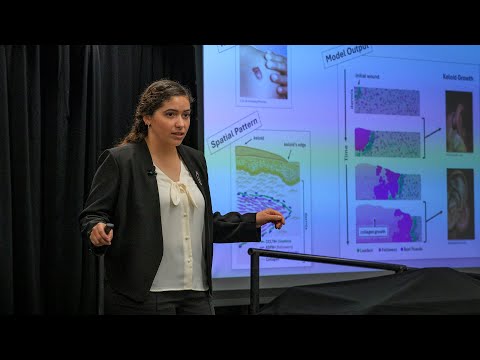
This research uses agent-based mathematical modelling to study keloid scar growth. By simulating interactions among collagen, immune cells, and key scar-associated cell types, the model predicts how keloids expand without requiring harmful patient experiments. The approach may guide future treatments for keloids and broader skin-healing conditions.
2026
This research investigates macrophages, immune cells that regulate infection, tissue repair, and cancer responses. Through laboratory experiments and machine-learning models, it aims to predict macrophage function across different diseases and patients. The work could improve prognosis, guide treatments, evaluate drug safety, and forecast recovery following major illnesses and injuries.
2026
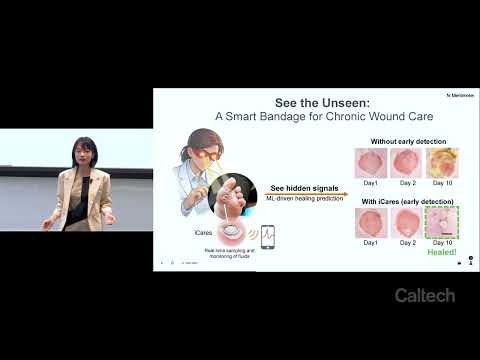
This research introduces iCares, a smart wound-monitoring bandage designed to detect infection and inflammation before visible symptoms appear. Using biosensors, fluid sampling, and machine learning, the system provides real-time wound analysis, enabling earlier intervention, personalized treatment, reduced complications, and improved healing outcomes for patients with chronic wounds.
Despite major advances in medicine, wound care has changed little in a century. This research explores how natural electrical signals in injured skin guide healing. By developing devices that mimic these signals, scientists aim to accelerate recovery and improve treatment for chronic wounds through bioelectric control of cellular behaviour.

Healing depends on a balance between extracellular matrix stiffness and cellular recycling through autophagy. This research shows that disrupted balance leads to chronic wounds or fibrotic scarring. By engineering materials with tunable stiffness, the work reveals how cells “sense” their environment, opening new paths to guide healthier wound healing.
This research presents an anti-inflammatory surgical gel that actively reprograms the immune response at the injury site. Rather than masking symptoms, it promotes proper healing, reduces prolonged inflammation, and improves recovery—especially for patients with delayed healing, such as those with diabetes—aligning biomaterials with modern surgical precision.
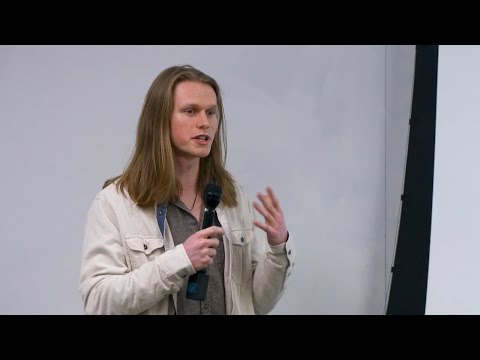
Corneal scarring causes widespread vision loss and is poorly treated by transplantation alone. This research develops a bioengineered corneal glue that both seals and heals wounds by promoting cell infiltration and reducing fibrosis. The approach enables scar-free healing, lowers transplant rejection risk, and offers a regenerative alternative to sutures and conventional sealants.
The speaker investigates why surgical sutures often fail and explores bio-inspired alternatives. Studying freshwater mussels—experts at sticking to wet surfaces—they analyze adhesive proteins to design stronger, water-compatible tissue adhesives. This research aims to create safer, more reliable surgical closure methods that reduce complications, infections, and reliance on traditional suturing.