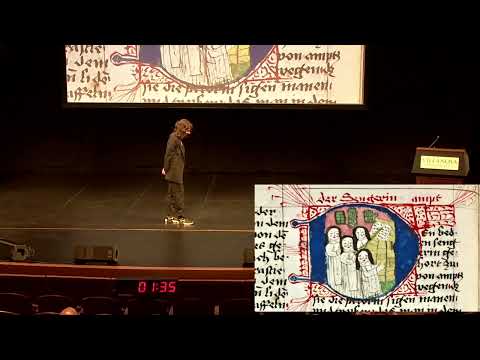
This research analyzes medieval letters between Heinrich Seuse and Margaret Ebner to explore alternative models of personhood. Through communal reading practices, Margaret is celebrated as complex and indeterminate. The study challenges rigid Western identity norms, highlighting a theological tradition that embraces ambiguity and values personhood beyond fixed categories and binaries.
AI can answer religious questions, but it often blends traditions and provides incomplete answers. While specialized models exist, general models like ChatGPT can perform better due to broader training data. The key insight is that theology remains a human, dialogical process—AI should assist, not replace, human judgment and interpretation.

This research challenges the narrative that Buddhism in US prisons primarily serves rehabilitation. It highlights the active role of incarcerated individuals in shaping religious practice and critiques simplistic contrasts between “prisoner” and “Buddhist.” By emphasizing diversity, community, and structural conditions, it calls for a more nuanced understanding of religion within carceral systems.