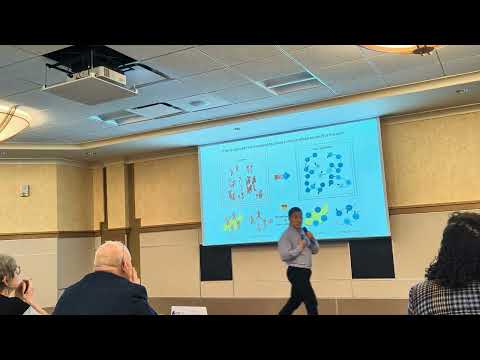
This research compares ionic polymers to dancers on a crowded floor. When molecular rotation and movement are restricted, viscosity rises and electrical conductivity drops. Using physics-based simulations, the study shows how molecular size and freedom of rotation control material performance, helping guide the design of safer, more efficient batteries.

This research transforms agricultural waste into biochar-based activated carbon for batteries and supercapacitors. By replacing costly materials, it improves energy storage performance while reducing costs, offering a sustainable and affordable solution that turns waste into valuable resources for future energy technologies.

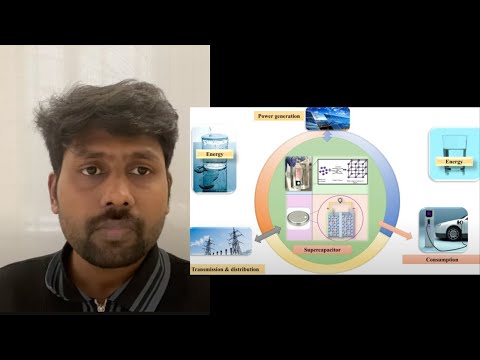
Batteries charge slowly and degrade over time. This research develops advanced supercapacitors using novel 2D materials and water-based electrolytes. The resulting devices charge rapidly, store five times more energy than conventional supercapacitors, last over 50,000 cycles, and offer a fast, affordable alternative for electric vehicles and energy storage.
2025
This research develops a high-performance supercapacitor using a conductive iron-based metal–organic framework. By overcoming low electrical conductivity, the material enables rapid charging and long cycle life, achieving storage performance three times higher than existing designs. The work advances next-generation energy storage solutions beyond conventional batteries.

Chemical reactions are often slow and depend on catalysts. This research shows that simply applying electrical charge to a catalyst—without using energy—dramatically accelerates reactions, increasing rates tenfold for every 60 mV. A AA battery can reduce a universe-long reaction to one second, offering a powerful, sustainable route for chemical manufacturing.
This research improves the lifespan of sodium-metal batteries, a cheaper and greener alternative to lithium-ion cells for renewable energy storage. By replacing copper with zinc as the supporting material, sodium forms smooth, stable deposits, extending battery life 15-fold. This innovation could deliver affordable, sustainable grid-scale energy storage.