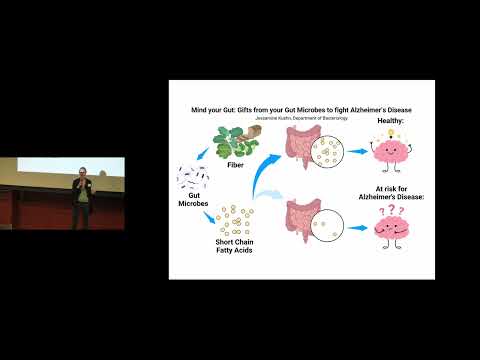
This thesis investigates how gut microbes influence brain health through short-chain fatty acids produced from dietary fibre. Measuring these compounds in stool samples, the research finds lower levels in people at risk for Alzheimer’s disease. The next phase tests whether supplementing short-chain fatty acids can prevent or treat Alzheimer’s in mouse models.

This talk highlights the lack of ADRD resources and care access for capital-D Deaf communities despite their elevated risk. Through community engagement, sign-language translations, and caregiver-informed guidelines, the research seeks to improve equitable aging and end-of-life support for Deaf individuals until a cure for Alzheimer’s becomes reality.
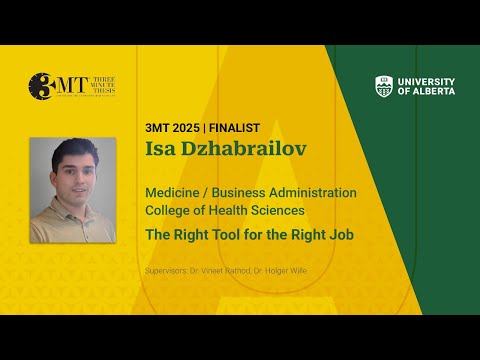
Prion diseases like CJD are extremely hard to detect early because harmful prions resemble normal brain proteins. This research introduces a new “flashbody” detection tool that binds only disease-causing prions, providing rapid, accurate, equipment-free diagnosis. Early lab results and patient-screening trials are promising, with potential applications to Alzheimer’s and other dementias.
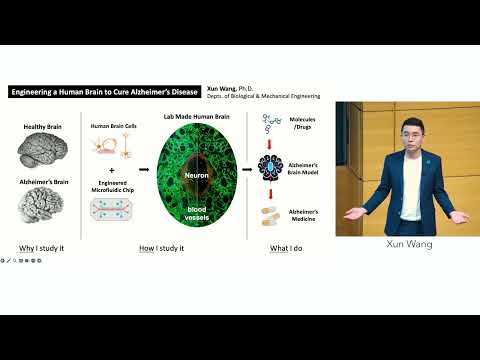
This research develops one of the most advanced human-engineered brain models to better study Alzheimer’s disease and test treatments. Using microfluidic chips containing all key brain cell types, blood-vessel systems, and Alzheimer’s-model neurons, the project enables efficient drug testing, personalised disease modelling, and the possibility of replacing animal testing in the search for a cure.

This research investigates how T cells influence microglial behavior in Alzheimer’s disease. Using a mouse model, the study found that removing T cells did not alter amyloid-beta plaques but unexpectedly led to healthier microglial activity and reduced myelin damage. The findings suggest T cells may worsen neurodegeneration and reveal new therapeutic avenues.
2025
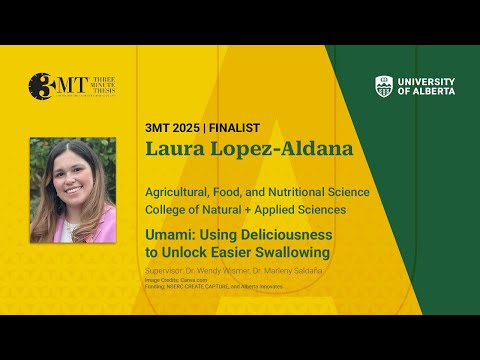
Umami, the savory fifth taste, can significantly increase saliva production and stimulate the swallowing reflex, offering potential benefits for people with dysphagia. In a study of 70 participants, foods high in umami boosted salivation, swallowing ease, and enjoyment. This research highlights umami’s promise for improving safety and pleasure in eating.

2025
The researcher rebuilds how cells sort materials to understand Alzheimer’s and Parkinson’s diseases. Using proteins and lipids like Lego pieces, they study how a key protein, retromer, malfunctions and disrupts cell transport. With cryogenic electron tomography, they aim to model this process and guide new treatments that restore healthy cellular function.