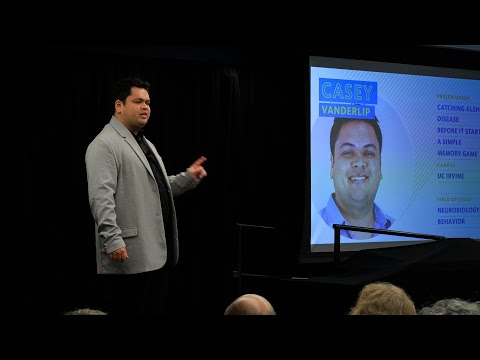
This research explores how the hippocampus and prefrontal cortex communicate to support memory for sequences of events. By understanding how these brain regions track past, present, and future, the work aims to shed light on cognitive impairments seen in disorders such as Alzheimer’s disease and depression.
This research investigates why women are more vulnerable to stress-related disorders. Using a mouse model of acute trauma, the study shows that estrogen levels in the hippocampus drive memory disruption after stress. Blocking local estrogen production protects memory, revealing sex-specific mechanisms relevant for targeted treatments.
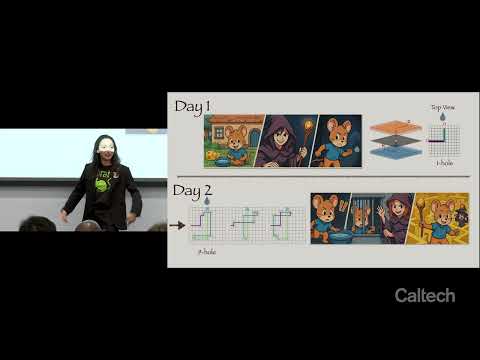
This talk describes research on how the brain learns and remembers by recording neural activity in mice navigating virtual environments. By studying hippocampal and cortical neurons, the work reveals how the brain builds cognitive maps of space and experience, offering insights into memory loss and Alzheimer’s disease.
Large unstructured lecture breaks often disrupt learning, causing distraction and poor recall. This research tests structured “consolidation pauses” where students spend 2–5 minutes reviewing material before break. Results show improved retention, better peer relationships, and up to a full letter-grade boost, demonstrating that small instructional changes markedly improve learning outcomes.
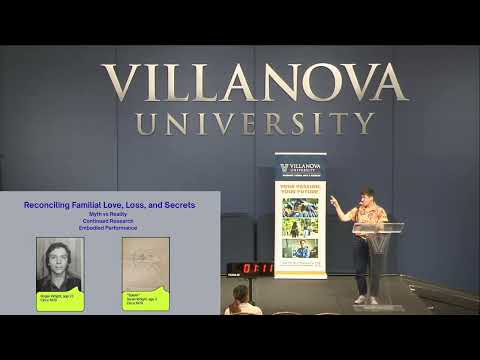
This research examines the cultural practice of burying umbilical cords in Nigeria’s Middle Belt, a region shaped by conflict and ecological crisis. Unlike Western views that treat the cord as waste, local traditions see land as a living repository of memory and identity, reframing human–land relationships as reciprocal and deeply interconnected.
This research compares three experimental models of anxiety — threat of shock, CO₂-induced panic, and speech-induced social anxiety — to reveal how each affects cognition. Findings show distinct patterns in attention, memory, and loss aversion, offering insights that could improve and better tailor treatments for anxiety disorders.