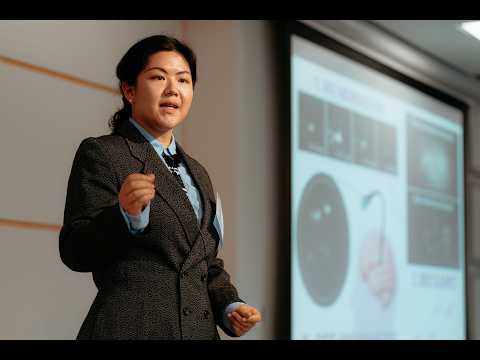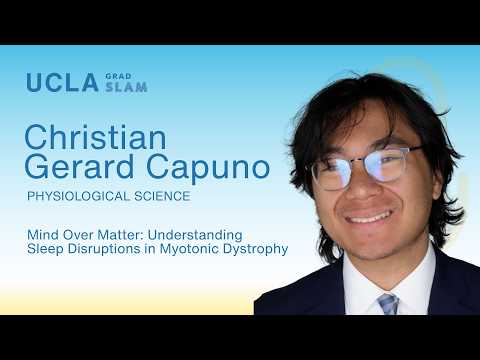
This research shows that early-life oxytocin treatment can reverse key features of fragile X syndrome in mice. Brief intervention strengthens neural connections, normalizes learning and social behavior, and prevents seizures into adulthood. The findings suggest oxytocin may offer a safe, early intervention strategy for fragile X and other intellectual disabilities.

This talk presents a new noninvasive MRI method to visualize the brain’s immune response. By imaging inflammation without injections or contrast agents, the research offers new insights into Alzheimer’s disease, ALS, and traumatic brain injury, helping researchers better understand how brain inflammation contributes to neurological disorders.

This talk describes research on how the brain learns and remembers by recording neural activity in mice navigating virtual environments. By studying hippocampal and cortical neurons, the work reveals how the brain builds cognitive maps of space and experience, offering insights into memory loss and Alzheimer’s disease.

This talk explains how devastating brain diseases such as Parkinson’s disease and dementia may begin not in the brain, but in the gut. The speaker describes how a protein called alpha-synuclein can change shape, form toxic complexes, and spread from cell to cell, traveling from the gut to the brain via neural connections. Once in the brain, these toxic complexes disrupt movement, memory, and thinking. The research identifies a key protein, FABP2, that promotes this harmful process by interacting with alpha-synuclein. By targeting and breaking this interaction early—at the level of the gut—the work aims to prevent neurodegenerative disease before irreversible brain damage occurs, potentially reducing patient suffering as well as medical and societal costs.

Myelin enables efficient communication between nerve cells and is essential for cognition, movement, and sensation. In neurodegenerative diseases, myelin is lost, impairing daily life. This research uses stem cells, gene profiling, and gene editing to uncover why myelin fails—and how regenerating it could transform treatment.

Neurodegenerative diseases like Alzheimer’s and Parkinson’s are closely linked to abnormal dopamine levels but are diagnosed too late. This research develops a tiny electrochemical brain sensor that selectively detects dopamine in real time. Such technology could enable earlier diagnosis, better monitoring, and improved treatment of neurological disorders.

Understanding how the brain controls behavior is key to studying neurological disease. This research introduces a high-speed robotic system that tracks mouse behavior in fine detail. By synchronizing precise behavioral data with brain activity recordings, it enables researchers to link specific neural regions to actions, improving insight into disorders like Parkinson’s and Alzheimer’s.

Researchers describe a simple strategy to slow Alzheimer’s disease by capping toxic tau protein chains. Inspired by a ring-stacking toy, they engineered spiky molecular “hats” that bind tau, halt aggregation, and reduce spread in cellular and postmortem brain models, suggesting broad potential across neurodegenerative disorders with future therapeutic promise worldwide.

This research investigates how motion perception changes with age and how these changes are reflected in brain function. Using behavioural tasks and fMRI, the research aims to develop simple visual tests that could be used in routine eye-care settings to identify early signs of cognitive decline and support healthy ageing.

This study introduces a “brain stress test” for depression, combining targeted brain stimulation with neuroimaging. Depressed individuals show exaggerated brain responses, which increase with repeated episodes. The test may serve as an early warning signal, helping clinicians identify relapse risk and intervene before depression returns.