This research investigates how landslides disrupt New Zealand's road network. By analysing past landslides, linking landslide severity to road impacts, and combining these relationships with landslide forecasts, the project aims to predict future road closures, improve emergency planning, reduce community isolation, and enhance public safety during severe weather and earthquakes.
2026
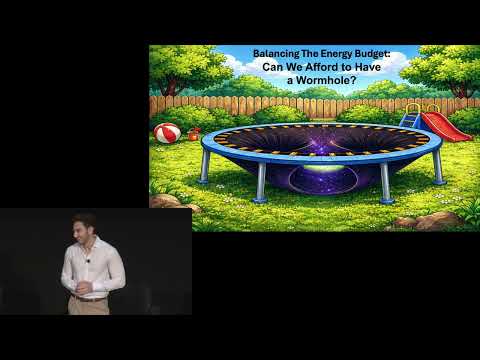
This research investigates whether ordinary matter can generate enough negative energy to keep a wormhole open. Combining theoretical calculations with computer simulations, it finds that nature tightly limits negative energy, making traversable wormholes unlikely. The work highlights how science tests imaginative ideas through rigorous mathematics and physical laws.
2026
This research investigates how the brain makes decisions under uncertainty by studying mice navigating reward-based mazes. Rather than relying on memorisation, mice continually update mental models through active exploration. These findings improve our understanding of anxiety disorders and may inspire more adaptive artificial intelligence systems.
This research examines how social networks influence life outcomes, showing that cross-income friendships significantly improve earnings, well-being, and social trust for low-income individuals. Using large-scale data, it demonstrates that environment shapes opportunity, highlighting the importance of institutions like universities in fostering connections that can transform lives and promote social mobility.

This research uses wearable data and AI to detect disease earlier by analyzing continuous health signals rather than isolated clinical snapshots. By personalizing models to individual baselines, the system identifies subtle changes linked to conditions like infections, heart issues, and mental health crises, enabling earlier intervention and potentially saving lives.
2026
This research transforms human urine into sustainable fertilizer using solar-powered systems that recover nutrients like nitrogen, phosphorus, and potassium. By turning toilets into decentralized fertilizer factories, the approach improves sanitation, reduces reliance on energy-intensive production, and provides affordable fertilizers to underserved farmers, supporting both environmental sustainability and economic development.
2026
This research improves combination vaccines by addressing antigen competition using injectable hydrogels that slowly release antigens. This approach produces balanced immune responses to multiple diseases, unlike traditional vaccines. The innovation could reduce the number of shots required, improve global vaccine access, and ensure more effective immunization, particularly in underserved populations.
2026
This research examines gender promotion gaps by analyzing policies, retention, and performance together. While promotion policies are gender-neutral and retention explains part of the gap, differences in measured performance—driven by reduced working hours—account for most disparities. Results show that how performance is defined critically shapes outcomes and policy effectiveness.
2026
This research searches for dark matter, which makes up most of the universe’s mass, by detecting ultralight particles using sensitive quantum sensors. By scanning frequencies like a radio and minimizing noise at cryogenic temperatures, the experiment aims to identify faint signals, bringing scientists closer to understanding the fundamental composition of the universe.
This research improves neural implants for vision restoration by reproducing natural brain activity patterns. Using a two-way stimulation approach in the retina, electrical signals are optimized to activate neurons precisely. This enables more accurate visual perception, moving beyond crude light flashes toward meaningful vision, with potential to restore recognition of familiar faces.