This research investigates whether Alexa can support speech practice for people with Parkinson’s disease. After eight weeks of home use, nine of ten participants developed stronger voices. Although not a replacement for professional speech therapy, voice assistants could provide accessible, everyday opportunities to practise louder, clearer speech outside clinical settings.
2026
This talk explores red light laser therapy as an accessible recovery approach for minor brain injury. Using a portable device applied to eight head areas, the research tracks fatigue, pain, attention, memory, brain activity and saliva markers. Early participants showed improved symptoms, suggesting promise for practical, inclusive brain health support.
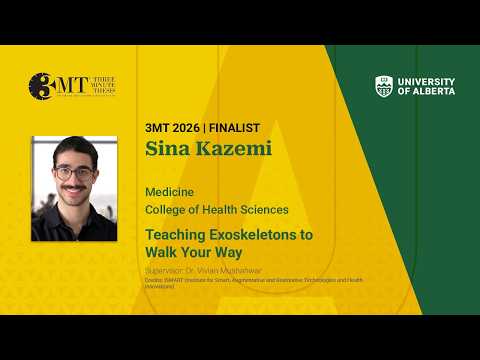
This research develops digital twin systems to personalise robotic exoskeleton movement. By integrating biomechanical modelling with real-time robotic control, it enables adaptive, user-specific walking patterns. The approach aims to improve rehabilitation outcomes by making assistive devices more natural, responsive, and aligned with individual movement needs.