
This research investigates how people strategically spread gossip by reasoning about social networks. Through laboratory experiments and real-world friendship networks, it shows that individuals balance social distance and popularity to maximize information spread while minimizing personal risk, revealing sophisticated cognitive mechanisms that support human communication and social intelligence.

2026
This research investigates mating behavior in Siamese fighting fish and reveals that visual interaction dramatically increases reproductive success. By studying 203 breeding pairs, the project demonstrates the importance of sight in social and mating behavior, suggesting that betta fish possess more sophisticated visual and individual recognition abilities than previously understood.

2026
This research investigates how reliance on AI systems affects human cognition and reasoning. Using concepts from cognitive offloading, the study compares AI-assisted and independent problem solving, measuring verification behavior, reasoning depth, and decision confidence. The work explores whether increasingly capable AI tools may unintentionally reduce critical thinking and human expertise.

2026
This research develops a group-based attachment intervention for emerging adults, particularly college students. Combining individual attachment-history interviews with peer group discussions, the program promotes mentalization, emotional security, and relational growth. Using mixed-method evaluation, the study explores how young adults can reshape attachment patterns and build healthier interpersonal relationships.

2026
This research examines how alcohol affects the severity and outcomes of suicide attempts among military service members and veterans. By analyzing documented attempts and personal narratives, the study reveals that alcohol often increases impulsivity and lethality, while occasionally interrupting attempts unintentionally, highlighting the need for alcohol-aware suicide prevention strategies.
2026
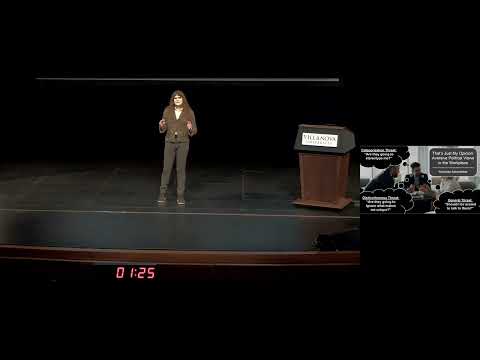
Political polarization increases identity threat during social interactions. This study examines how liberals and conservatives respond to politically and apolitically negative comments. Results show different types of identity threat emerge depending on context, with both groups experiencing similar levels overall. Findings highlight the complexity and nuance of identity threat in political engagement.

2026
This research examines how leadership behavior influences high-stakes decision-making in maritime operations. It highlights how human factors under pressure shape risk perception and outcomes, often more than technical systems. The study proposes a behavior-based decision framework to improve safety, efficiency, and cost-effectiveness in complex, high-risk environments at sea.

2026
This research shows that toxic behavior in online games is contagious, especially from teammates. Using machine learning and econometric analysis of 300,000 messages, it finds toxicity spreads socially rather than individually. The study suggests that effective interventions should target breaking transmission patterns rather than simply punishing players to improve online environments.

2025
This research examines whether emotional sensitivity in women varies across the menstrual cycle by studying the interaction of sleep, hormones, and time. By tracking emotional memory at multiple cycle stages, the work aims to replace stereotypes with evidence and address long-standing gaps in women’s health and cognitive research.