This research uses nematode worms and machine learning to quantify changes in neuron structure linked to neurodegenerative diseases. By replacing subjective visual analysis with objective computational methods, it identifies structural abnormalities and improves understanding of disease mechanisms, supporting future advances in diagnosis and treatment.
This research shows that children born without a hand can generate complex muscle signals by imagining movements, enabling control of advanced prosthetics. Their abilities develop similarly to typical motor patterns, challenging assumptions and expanding access to sophisticated prosthetic technology for paediatric patients.
This research uses machine learning to predict trauma demand and optimise hospital scheduling. By forecasting patient volume and dynamically allocating operating rooms, it reduces cancellations, improves efficiency, and lowers costs. The system has the potential to transform healthcare delivery by balancing emergency and elective care more effectively.
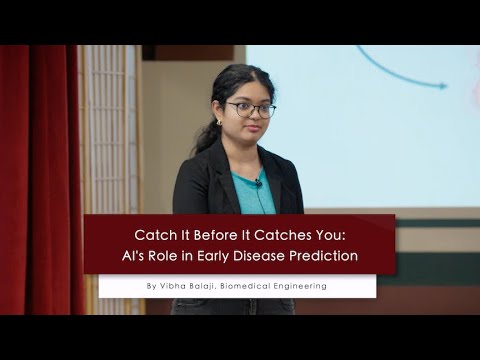
This talk traces the devastation of the Black Death to highlight a modern crisis: antibiotic resistance. Misuse of antibiotics accelerates the rise of superbugs. Using AI and machine learning, the research identifies genetic resistance patterns and guides effective treatments, aiming to improve clinical decisions and prevent a return to a pre-antibiotic era.
This research improves large-scale optimisation by combining problem decomposition with machine learning. By identifying similarities between subproblems, it predicts solutions instead of solving each independently, reducing computational cost. The approach enhances efficiency in logistics and extends to applications such as healthcare scheduling and transport network design.
This research develops Smart Twin PM, a six-layer digital twin system for predictive maintenance in manufacturing. By combining real-time data analytics, physics-based validation, cybersecurity checks, and smart scheduling, it reduces unexpected failures by 15% and false alarms by 20%, enabling proactive, trustworthy, and efficient machine maintenance.
This research presents a modular visuotactile robotic system for manipulating deformable objects such as cables, towels, and garments. Unlike rigid-object manipulation, deformables pose challenges due to occlusion, complex dynamics, and high variability. The system combines vision for global context and tactile sensing (GelSight) for precise local control, enabling tasks like cable tracing, cloth edge following, towel folding, and garment handling. It uses reactive control, learned dynamics (LQR), affordance models, and dense correspondence to generalise across tasks and objects. A key innovation is shifting from global state estimation to local, feedback-driven manipulation, improving robustness, efficiency, and real-world applicability in domains like manufacturing, healthcare, and assistive robotics.
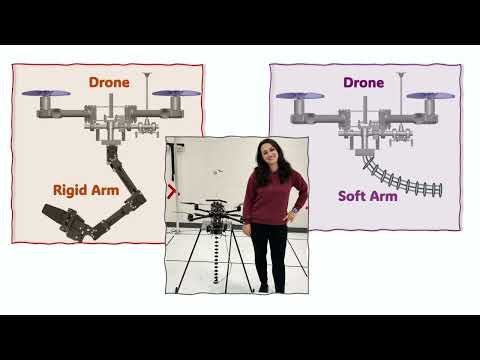
This research uses drone imagery and a hybrid AI model to classify rangeland cover as green vegetation, dead vegetation, or bare soil. Combining two neural network approaches achieved 96% accuracy while requiring only simple, low-cost sensors. The method enables fast, large-scale monitoring to combat invasive shrubs and support sustainable land management.
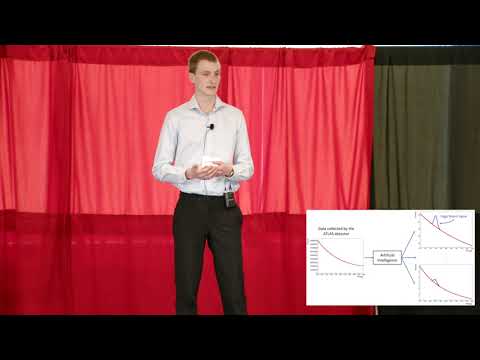
Traditional neural networks are powerful but difficult to interpret and vulnerable to small input changes. This research develops wavelet-based neural networks with provable stability guarantees, extending the scattering transform to texture modeling. The approach reduces feature complexity while improving interpretability, enabling more reliable and mathematically explainable AI systems.
This thesis developed a real-time system for detecting, classifying, and locating sound events using only audio data. A network of 16 microphones and deep learning techniques achieved 96% classification accuracy and average localization error of 1.4 meters, demonstrating that sound-based analysis can effectively replace vision in monitoring applications.
Pagination
- Previous page
- Page 4
- Next page