
This research examines how continuity of care at Federally Qualified Health Centers affects low-income adults as they age into Medicare eligibility. Using national Medicare and Medicaid data, it investigates whether maintaining long-term primary care relationships improves health outcomes, informing policies that strengthen community healthcare services and support healthy ageing.
2025
This research develops self-sterilising polymer coatings that become highly acidic when exposed to moisture, rapidly destroying harmful bacteria such as MRSA and E. coli. Designed for hospitals, classrooms, and other high-contact surfaces, these materials could reduce infections without harsh chemicals, helping prevent the spread of antibiotic-resistant bacteria.
2026
This research investigates how Pseudomonas aeruginosa adapts to drinking water systems before causing human infections. By identifying a previously unknown gene essential for biofilm formation and survival, the work provides new insight into how dangerous bacteria prepare for infection and reveals potential targets for preventing disease before it develops.

This research investigates how lung mucus and its mucin molecules defend against Coccidioides, the fungus that causes Valley fever. By showing that mucins slow fungal growth, the work suggests mucus shapes infection before symptoms appear, opening new possibilities for earlier diagnosis and treatments against Valley fever and other infectious diseases.
2026
This research has developed an electronic nose that combines gas sensors with machine learning to detect food spoilage and hidden allergens. By recognizing unique scent signatures more accurately than the human nose, the technology could improve food safety, prevent allergic reactions, reduce food waste, and eventually be integrated into everyday devices.
This research explores how Chinese Christian reformers contributed to humanitarian relief and rural reconstruction during the Second Sino-Japanese War. Through literacy programmes, public health initiatives, and community development, they demonstrated that religion could function not only as belief, but also as a practical response to social crisis.
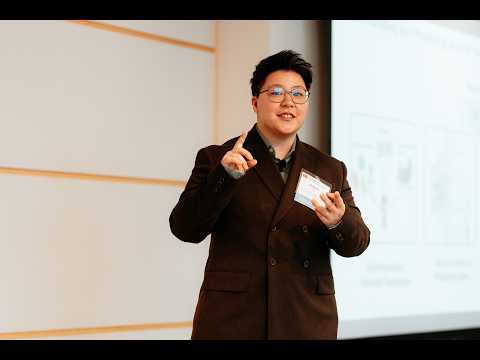
This research uses artificial intelligence to analyse immune-system data and predict vaccine effectiveness. By identifying early biological signals associated with strong, long-lasting immunity, the work aims to improve vaccine design, personalise vaccination strategies, and support development of universal vaccines capable of protecting against rapidly evolving infectious diseases.

2026
This thesis examines who turns to AI for mental health support, rather than whether AI can be a therapist. Drawing on TherapyGPT forum analysis and ongoing experiments, the research identifies fear of judgment, trust in AI and past therapist failures as possible drivers of AI therapy use.
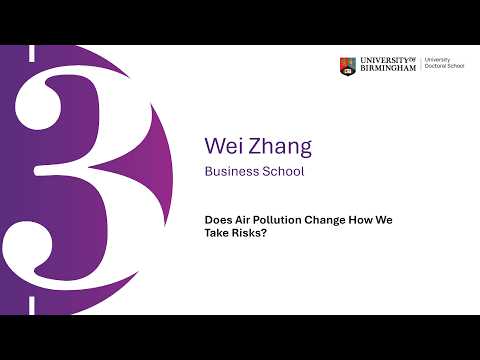
This research examines whether air pollution affects risk-taking behaviour. Using survey data from 40,000 Indonesians and satellite pollution measurements, it shows that higher pollution levels make people more risk-averse. Because risk preferences influence education, careers, entrepreneurship, and innovation, cleaner air may improve both health outcomes and economic decision-making.

This study examines the relationship between sexual position discordance, sexualized substance use, and sexual satisfaction among nearly 2,000 sexual minority men in Canada. While discordance between preferences and behaviors was common and not linked to lower satisfaction, frequent use of substances such as crystal meth and poppers was associated with reduced sexual satisfaction.