This talk explores red light laser therapy as an accessible recovery approach for minor brain injury. Using a portable device applied to eight head areas, the research tracks fatigue, pain, attention, memory, brain activity and saliva markers. Early participants showed improved symptoms, suggesting promise for practical, inclusive brain health support.
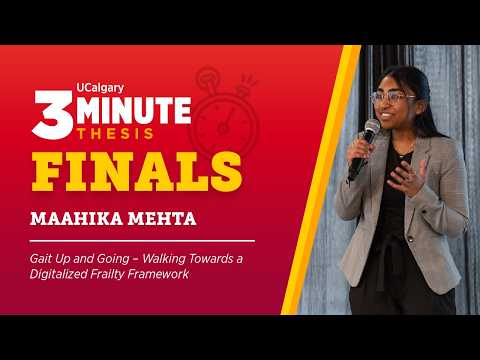
This research examines whether changes in walking patterns can predict frailty before serious health events occur. Using smart insoles, GPS tracking, and machine learning, mobility data from older adults is analyzed to identify early warning signs of decline. The goal is to enable proactive interventions and support healthier aging.
This research develops a robotic system capable of reproducing real-world knee motions and ACL injury mechanisms in human cadaver knees. The platform enables realistic testing of injury-prevention technologies, improves understanding of ACL rupture biomechanics, and may help reduce injury risk, particularly among women who experience higher ACL injury rates.
This research investigates whether blood flow restriction training can improve postpartum recovery by enhancing the benefits of everyday activities. By integrating low-intensity exercise into routine childcare, household tasks, and walking, the study aims to increase strength, endurance, and well-being while reducing pain and fatigue in new mothers.
This research explores why former human traffickers in Indonesia stopped offending. Through interviews with ten ex-traffickers, the study found that marriage and parenthood often triggered moral transformation by creating empathy and shame. The findings suggest trafficking prevention should focus not only on punishment, but also on strengthening families and social bonds.
This research develops a fast, space-efficient method for assessing fall risk in older adults using wearable sensors and AI analysis of a seated foot-tapping task. Early findings show that slower, inconsistent tapping predicts higher fall risk. The approach could improve prevention strategies, reduce healthcare costs, and help older adults maintain independence.
This research explores how media messaging about sedentary behavior affects people with spinal cord injuries. Through qualitative interviews, participants described “sitting is the new smoking” headlines as offensive and exclusionary. The study advocates more accurate, inclusive scientific communication and is helping develop media guidelines that better reflect the realities of disability and health.
This research investigates the role of force feedback in virtual reality training. By comparing users with and without haptic feedback, it examines effects on brain activity, skill acquisition, and real-world performance. The study aims to improve VR training systems by incorporating sensory input essential for effective motor learning and skill transfer.
This research challenges the narrative that Buddhism in US prisons primarily serves rehabilitation. It highlights the active role of incarcerated individuals in shaping religious practice and critiques simplistic contrasts between “prisoner” and “Buddhist.” By emphasizing diversity, community, and structural conditions, it calls for a more nuanced understanding of religion within carceral systems.
This research shows that children born without a hand can generate complex muscle signals by imagining movements, enabling control of advanced prosthetics. Their abilities develop similarly to typical motor patterns, challenging assumptions and expanding access to sophisticated prosthetic technology for paediatric patients.
Pagination
- Page 1
- Next page